Q.Draw a labelled diagram of Transverse section of Human testis. OR Draw a labelled diagram of longitudinal section of a typical flower.
You're viewing a preview — the full solution, concept, methods & PYQ mapping are locked.
Start your 14-day free trial to unlock the full solution →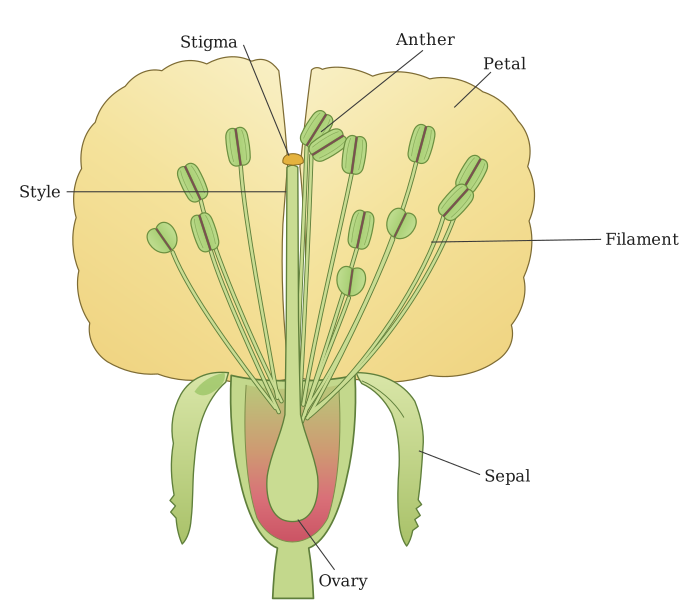
T.S. of testis shows seminiferous tubules (spermatogenesis) with interstitial Leydig cells between them. [OR: L.S. of a flower shows sepals, petals, stamens and the central carpel/pistil arranged on the thalamus.]
Transverse Section (T.S.) of Human Testis — key labelled structures:
The testis is covered by a tough connective-tissue capsule called the tunica albuginea, from which septa extend inward, dividing the testis into compartments. Within these compartments lie highly coiled seminiferous tubules — the actual site of sperm production (spermatogenesis) — lined internally by the germinal/spermatogenic epithelium (spermatogonia in various stages of division, up to spermatozoa) interspersed with Sertoli cells (which nourish developing sperm). In the loose connective tissue occupying the spaces BETWEEN the seminiferous tubules lie clusters of interstitial cells / Leydig cells, which synthesise and secrete the male sex hormone testosterone. Sperm produced in the seminiferous tubules pass into a network of ducts, the rete testis, and then into the vasa efferentia, which lead them to the epididymis.
(Key labels: tunica albuginea, seminiferous tubule, germinal epithelium/spermatogonia, Sertoli cell, interstitial/Leydig cells, rete testis, vasa efferentia.)
OR — Longitudinal Section (L.S.) of a typical flower — key labelled structures:
A typical flower is borne on a stalk called the pedicel, which expands at its tip into the thalamus (receptacle), on which the four floral whorls are arranged, typically from outermost to innermost:
- Calyx — the outermost whorl, made of green, leaf-like sepals, which protect the flower in the bud stage.
- Corolla — the next whorl, made of usually brightly coloured petals, which attract pollinators. …
Unlock everything free for 14 days
- Full step-by-step solutions
- Concept-first explanations
- Methods, shortcuts & mistakes
- PYQ mapping + timed mock tests
Full access for 14 days. No credit card required.