Chemistry · Ch 15 — Introduction to Polymer Chemistry
Classification of polymers on the basis of structure
Classification of polymers on the basis of structure
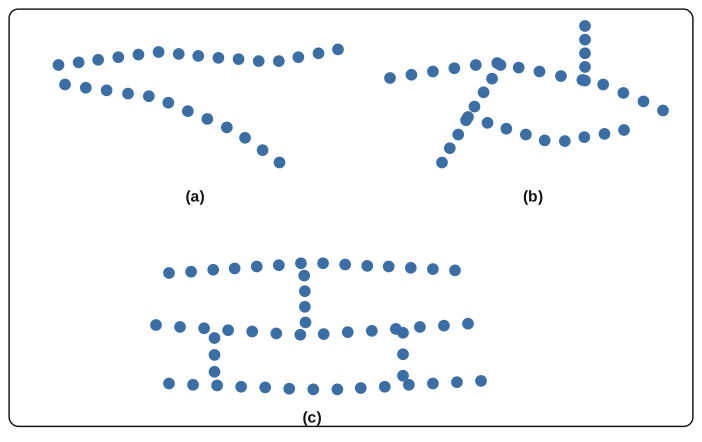
How the monomer units link together -- the chain configuration -- gives a second, independent way to classify a polymer, into three general types (shown in Fig. 15.1). Linear or straight chain polymers form when monomer molecules join in a simple, unbranched line; this arises from bifunctional monomers or simple alkenes, and PVC and high density polythene are examples. Branched chain polymers form when a monomer has three (or more) functional groups, or already carries a side chain, so that shorter branches sprout off the main backbone; low density polythene is the classic example. Cross-linked (or network) polymers form when polyfunctional monomers create additional bonds (cross-links) directly between separate linear chains, tying the whole material into a three-dimensional network rather than independent strands; bakelite and melamine resin are examples …
Drawn by us to help you understand the concept clearly, and verified to make sure it's accurate. For exams, practice from your textbook's own diagram.
What this figure shows. Three schematic panels showing how repeat units (drawn as small connected units/blocks) can be arranged. (a) Linear/straight chain: a single unbranched sequence of repeat units joined end to end in one continuous line, as in PVC or high density polythene. (b) Branched chain: a main backbone chain of repeat units with shorter side chains/branches sprouting off at intervals, as in low density polythene. (c) Cross-linked/network: several linear chains of repeat units drawn side by side with additional bonds (cross-links) connecting one chain to the next at multiple points, building up …