Chemistry · Ch 15 — Introduction to Polymer Chemistry
Classification of polymers on the basis of biodegradability
Classification of polymers on the basis of biodegradability
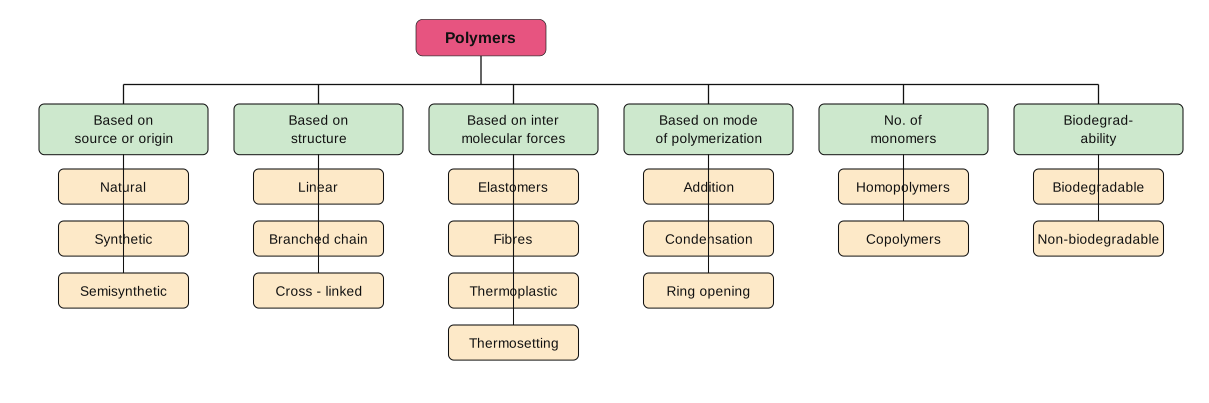
The final classification basis is biodegradability: whether or not microbes in the environment can break the polymer down. Most synthetic polymers are essentially unaffected by microbes -- these non-biodegradable polymers accumulate as waste that persists in the environment for a very long time, causing serious pollution problems. Most natural fibres, by contrast, are readily biodegradable. To address the pollution caused by non-biodegradable plastics, scientists have developed a newer class of biodegradable synthetic polymers, engineered with functional groups similar to those found in natural biopolymers such as proteins; these are covered in detail in section 15.5. Fig. 15.2 draw …
Drawn by us to help you understand the concept clearly, and verified to make sure it's accurate. For exams, practice from your textbook's own diagram.
What this figure shows. A tree/flow diagram with 'Polymers' as the root, branching into the six classification bases covered in this section, each shown as its own sub-branch listing its categories: 'Based on source or origin' branches to Natural, Semisynthetic, Synthetic; 'Based on structure' branches to Linear, Branched chain, Cross-linked; 'Based on inter molecular forces' branches to Elastomers, Fibres, Thermoplastic, Thermosetting; 'No. of monomers' branches to Copolymers, Homopolymers; 'Biodegradability' branches to Biodegradable, Non-biodegradable; 'Based on mode of polymerization' branches to Addition, Condensation, Ring opening. The diagram is a visual summary collecting every class …