Chemistry · Ch 2 — Solutions
Capacity of Solution to Dissolve Solute
Capacity of Solution to Dissolve Solute
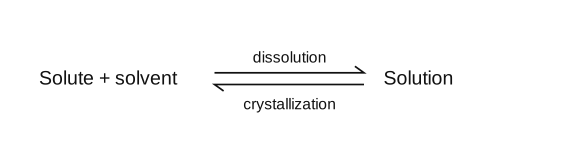
Chemists need to know the capacity of solutions to dissolve a solute. Suppose that a solute is added to a solvent. It dissolves readily at first. The dissolution then slows down as more solute is added. If we continue the addition of solute, the dissolution stops -- the solution at this point is said to be saturated. A dynamic equilibrium can be reached where the number of solute molecules leaving the crystal to pass into solution is equal to the number returning from the solution to the crystal. Thus,
Drawn by us to help you understand the concept clearly, and verified to make sure it's accurate. For exams, practice from your textbook's own diagram.
What this scheme shows. The saturation process written as a two-way equilibrium: solute plus solvent on the left, solution on the right, with the forward arrow labelled dissolution and the reverse arrow labelled crystallization. At saturation the two opposing processes run at equal rates, so no further net dis …
…