Q.What is electrocardiogram? Write its significance.
You're viewing a preview — the full solution, concept, methods & PYQ mapping are locked.
Start your 14-day free trial to unlock the full solution →An ECG is the graphical trace of the heart's electrical activity, recorded via body-surface electrodes, and it is used clinically to detect and diagnose heart abnormalities.
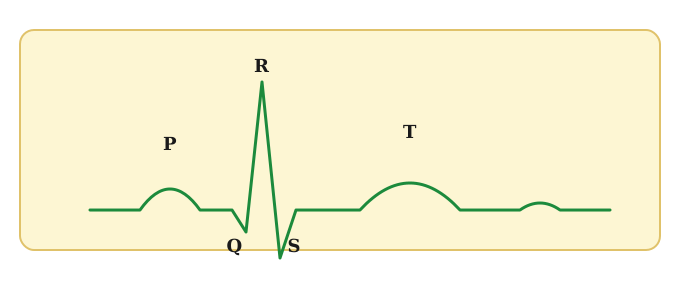
Each heartbeat is triggered and coordinated by electrical impulses generated in the sino-atrial node (the natural pacemaker) and conducted through the atrio-ventricular node and the bundle of His/Purkinje fibres. This wave of electrical excitation associated with the cardiac cycle can be detected on the surface of the body using electrodes, and the standard machine used to record it is called an electrocardiograph; the record it produces is the electrocardiogram (ECG). A normal ECG trace shows a characteristic pattern of waves: the P wave, corresponding to depolarisation (electrical activation) of the atria; the QRS complex, corresponding to depolarisation of the ventricles; and the T wave, corresponding to repolarisation (recovery) of the ventricles. The significance of the ECG lies in its diagnostic value — since the shape, timing, and amplitude of these waves reflect how electrical impulses are travelling through the heart, doctors can use deviations from the normal pattern to detect arrhythmias …
Unlock everything free for 14 days
- Full step-by-step solutions
- Concept-first explanations
- Methods, shortcuts & mistakes
- PYQ mapping + timed mock tests
Full access for 14 days. No credit card required.