Q.a. Explain meiosis II with the help of a labelled diagram. OR b. What are macromolecules? Give two examples. Mention four properties of proteins.
You're viewing a preview — the full solution, concept, methods & PYQ mapping are locked.
Start your 14-day free trial to unlock the full solution →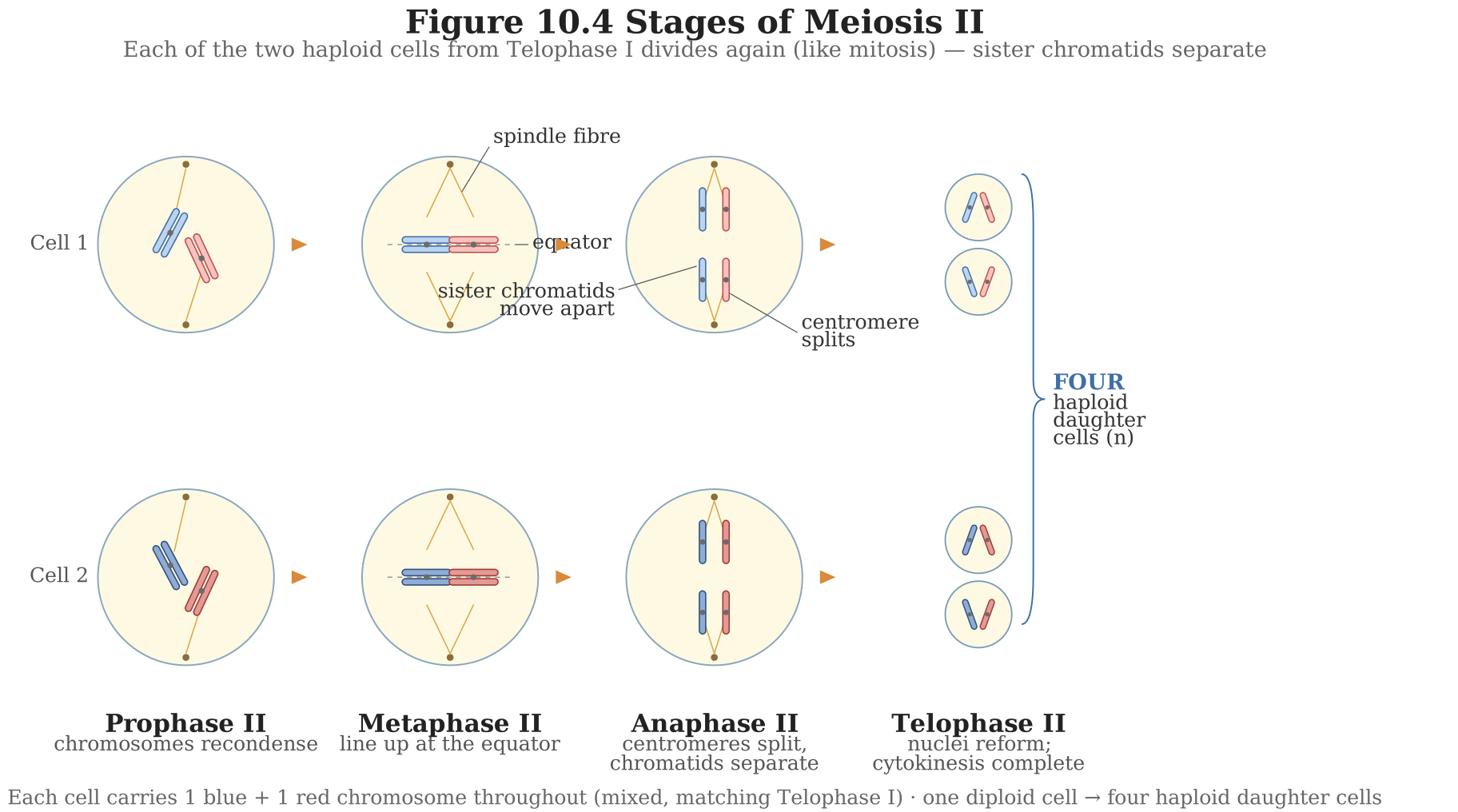
Meiosis II separates sister chromatids (like mitosis) in the two haploid cells from meiosis I, giving four haploid cells overall.
a. Meiosis II:
Meiosis II follows meiosis I without an intervening round of DNA replication (there is only a brief interkinesis). It occurs in each of the two haploid cells produced by meiosis I and closely resembles a normal mitotic division:
- Prophase II: Chromosomes (each still made of two sister chromatids) condense again; the nuclear envelope breaks down and a new spindle apparatus forms.
- Metaphase II: The chromosomes align individually at the equatorial plate, with spindle fibres from opposite poles attached to the centromere of each chromosome.
- Anaphase II: The centromere of each chromosome finally splits, and the two sister chromatids separate and move to opposite poles of the cell.
- Telophase II: Chromatids (now individual chromosomes) reach the poles, decondense, nuclear envelopes re-form, and cytokinesis divides each cell — yielding, in total (from the original meiocyte), four haploid daughter cells, each with half the chromosome number of the parent cell and genetically distinct due to crossing over and independent assortment that occurred in meiosis I.
Diagram (described): two haploid cells (each with duplicated chromosomes as X-shaped sister chromatids) shown side by side; each progresses through prophase II (spindle forming), metaphase II (chromosomes at the equator), anaphase II (sister chromatids pulled to opposite poles, shown as separate single-strand chromosomes), and telophase II (two new nuclei per cell); final panel shows four small haploid daughter cells.
Or b. Macromolecules and properties of proteins:
Macromolecules are very large, complex molecules formed by the polymerisation of many smaller repeating monomer units, typically having molecular weights in the thousands to millions of Daltons; they make up the bulk of the organic matter in living cells. Two examples are proteins (polymers of amino acids) and polysaccharides, e.g. starch/cellulose (polymers of monosaccharides).
Four properties of proteins: …
Unlock everything free for 14 days
- Full step-by-step solutions
- Concept-first explanations
- Methods, shortcuts & mistakes
- PYQ mapping + timed mock tests
Full access for 14 days. No credit card required.