Physical Education · Ch 3 — Yoga as Preventive Measure for Lifestyle Disease
Sarala Matsyasana
Sarala Matsyasana
Sarala Matsyasana (Easy Fish Pose)
The word Saral means easy and Matsya means fish, so Sarala Matsyasana is the easy fish pose — a gentler version of the fish posture that most students can manage. It is taught in the CBSE Class 12 Physical Education unit as a simple, calming asana helpful in hypertension.
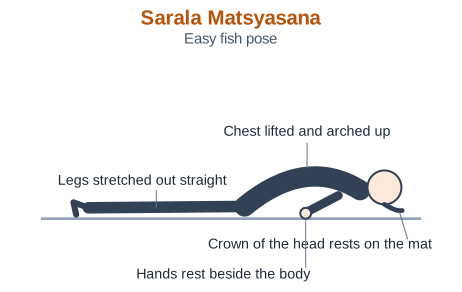
Drawn by us to help you understand the concept clearly, and verified to make sure it's accurate. For exams, practice from your textbook's own diagram.
A line drawing of a person reclining on the back with the legs extended and together, the crown of the head resting on the mat and the neck, upper back and shoulders gently lifted so the che …
Technique
Lie flat on the back.
- With the support of your hands, keep the top of your head on the mat.
- The neck, upper back and shoulders will be lifted from the ground.
- Relax your hands at the sides of your body.
- Breathe normally and keep your toes stretched out.
- Hold the position for about 30 seconds, then relax.
Breath Awareness
- Inhale as you lift the chest and tuck the head.
- Exhale while relaxing the body and bringing it back to the initial position.
- Then return to normal breathing.
Benefits
- Improves the digestive system.
- Helps to cure irritable bowel syndrome.
- Helps to get rid of abdominal-related issues.
Contraindications
- People with cervical spondylitis and frozen shoulder should avoid practising this asana.
Why Sarala Matsyasana helps manage hypertension
This gentle variation lifts the chest only slightly, using the support of the hands rather than the deep backward arch of the full Matsyasana, which keeps the head below heart level and avoids any sudden change in blood flow to the head, a genuinely safer chest-opener for a hypertensive student than a more intense back-bend. The slow, normal breathing maintained throughout keeps the nervous system calm rather than activating the stress response that a strenuous posture might trigger.
Common mistakes
- Pushing the chest up too forcefully in an attempt to copy the deeper curve of the full Matsyasana defeats the purpose of practising the easy version, which is meant to be gentle and sustainable.
- Letting the neck bear the body's weight instead of the hands and forearms can strain the cervical spine; the hands should actively support the head throughout. …