Q.What is a junction diode? Draw the circuit diagram for it in forward-biased condition.
You're viewing a preview — the full solution, concept, methods & PYQ mapping are locked.
Start your 14-day free trial to unlock the full solution →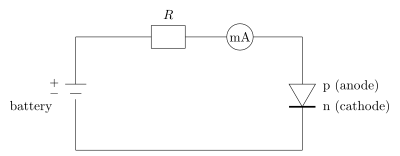
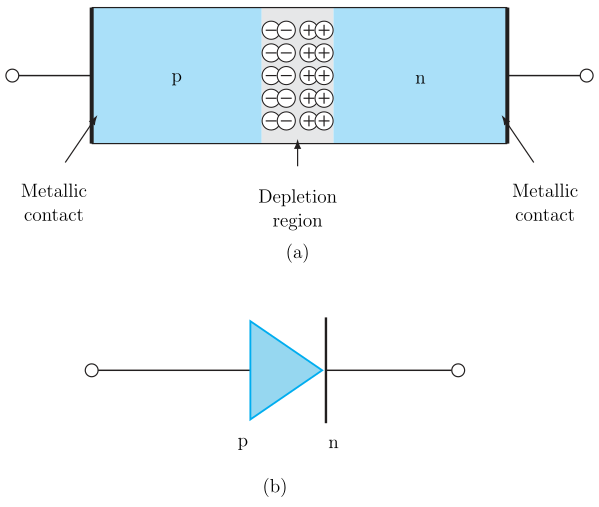
A junction diode is a p-n junction device that allows current to flow easily in forward bias but blocks it in reverse bias.
A junction diode is formed by joining a p-type semiconductor to an n-type semiconductor, creating a p-n junction with two terminals: the anode (p-side) and cathode (n-side). It behaves like a one-way valve for current — it offers very low resistance to current flow in one direction (forward bias) and very high resistance in the opposite direction (reverse bias).
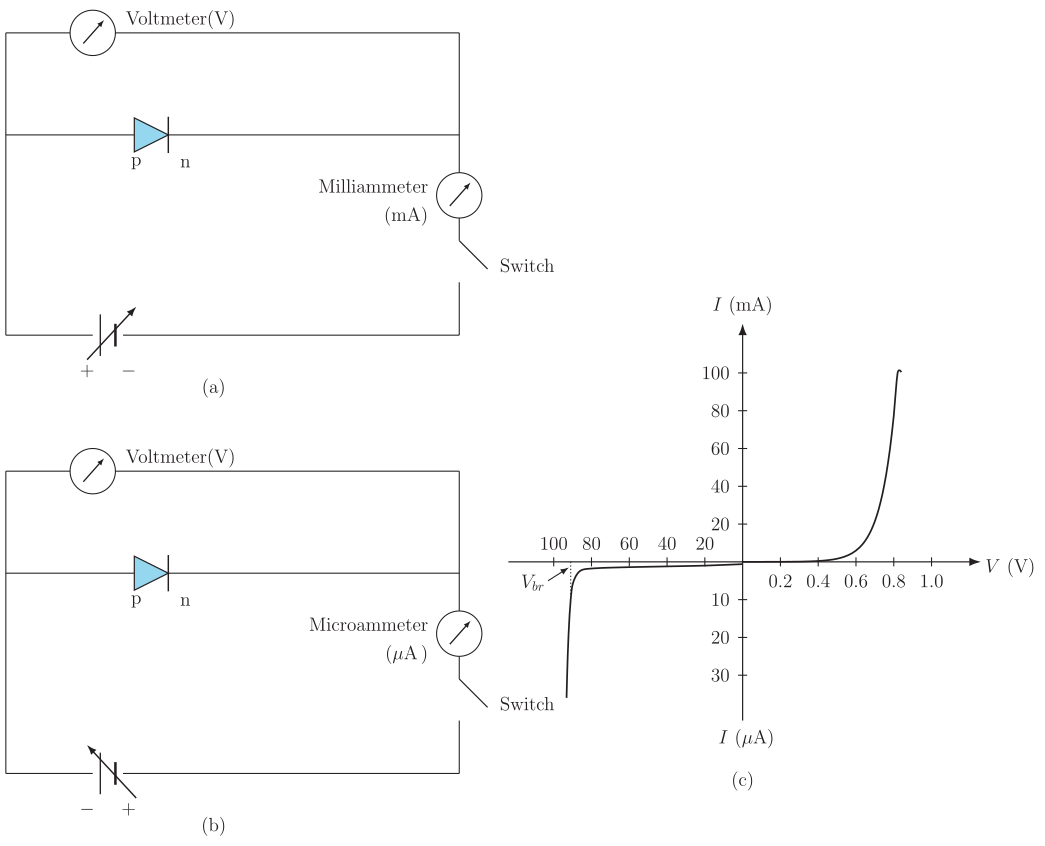
Forward-biased circuit: The diode is forward biased when the p-side is connected to the positive terminal of the battery and the n-side to the negative terminal, through a current-limiting resistor R in series, with a milliammeter to measure current:
Battery(+) —— p-side [ Diode ] n-side —— R —— Battery(−), with a milliammeter in series to read the forward current.
…
Unlock everything free for 14 days
- Full step-by-step solutions
- Concept-first explanations
- Methods, shortcuts & mistakes
- PYQ mapping + timed mock tests
Full access for 14 days. No credit card required.