Q.Derive formulae for the maximum height (H) and horizontal range (R) of projectile motion. Draw the necessary diagram.
You're viewing a preview — the full solution, concept, methods & PYQ mapping are locked.
Start your 14-day free trial to unlock the full solution →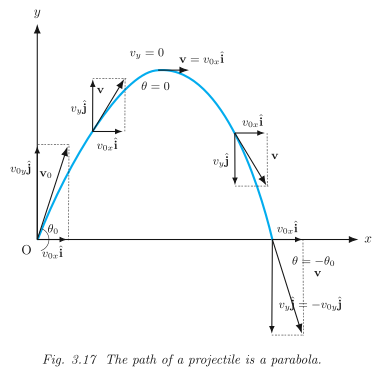
For a projectile launched at speed u and angle theta, H = u^2sin^2(theta)/(2g) and R = u^2sin(2*theta)/g.
Set up axes with the point of projection as origin, x horizontal, y vertical (upward positive), and g acting downward.
Initial velocity components: u_x = ucos(theta) (constant throughout flight, no horizontal force), u_y = usin(theta) (decelerated by gravity).
[Diagram description: a parabolic trajectory from the origin O, rising to a peak at height H directly above the midpoint of the horizontal range, then descending back to the ground level at horizontal distance R from O; the initial velocity u is shown at angle theta to the horizontal, with components ucos(theta) (horizontal) and usin(theta) (vertical) marked at O. No source figure was supplied for this item, so the trajectory is described here in words rather than drawn.]
Maximum height H: At the highest point, the vertical velocity component becomes zero. Using v_y^2 = u_y^2 - 2gH with v_y = 0:
0 = (usin(theta))^2 - 2gH H = u^2sin^2(theta) / (2*g) …
Unlock everything free for 14 days
- Full step-by-step solutions
- Concept-first explanations
- Methods, shortcuts & mistakes
- PYQ mapping + timed mock tests
Full access for 14 days. No credit card required.