Question of 117
Q.(i) Draw a labelled diagram of mechanism of inspiration and expiration.
(ii) Explain mechanism of inspiration and expiration.
OR
(i) Draw a labelled diagram of internal structure of human heart.
(ii) Describe any three diseases related to heart and circulatory system.
Rajasthan RbseRajasthan Board Senior Secondary Examination 2020Subjective· 4mImportance★★★★★
0% · 0/117 Questions
You're viewing a preview — the full solution, concept, methods & PYQ mapping are locked.
Start your 14-day free trial to unlock the full solution →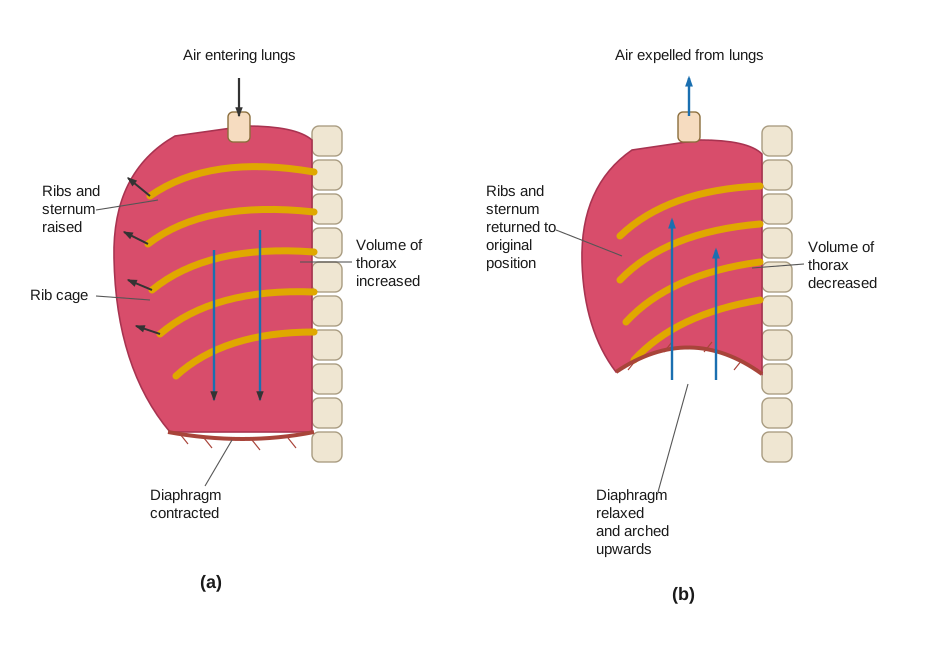
Breathing is driven by rhythmic changes in thoracic volume (via the diaphragm and rib muscles), which change lung pressure relative to the atmosphere and drive air flow (Boyle's law).
- Diagram (described): Show the thoracic cavity in two states — (a) Inspiration: diaphragm flattened/pulled downward, ribs raised and pulled outward/upward by contracted external intercostal muscles, lung volume increased (larger outline); (b) Expiration: diaphragm domed upward into the thoracic cavity, ribs lowered inward as external intercostals relax, lung volume decreased (smaller outline). Label diaphragm, ribs, external/internal intercostal muscles, lungs, and pleural cavity in each.
- Mechanism:
- Inspiration (active process): The dome-shaped diaphragm contracts and flattens, and the external intercostal muscles contract, lifting the ribs and sternum outward and upward. Both actions increase the volume of the thoracic (and hence pulmonary) cavity. By Boyle's law, this larger volume causes intrapulmonary pressure to fall below atmospheric pressure, so air rushes in from the higher-pressure atmosphere into the lungs, down the pressure gradient. …
Unlock everything free for 14 days
- Full step-by-step solutions
- Concept-first explanations
- Methods, shortcuts & mistakes
- PYQ mapping + timed mock tests
Full access for 14 days. No credit card required.