Business Studies · Ch 1 — Nature and Significance of Management
Middle Management
Middle Management
Middle Management: The Connecting Link
Middle management acts as the crucial bridge between the top-level managers and the lower-level (first-line) managers. They are subordinate to the top managers but are superior to the first-line managers. This level is often referred to as the executive or departmental level.
Who Are They?
Middle managers are typically known as division heads or departmental heads. For example, a Production Manager is a middle-level manager. Other common titles include Marketing Manager, Finance Manager, and Sales Manager.
Core Responsibilities
Their primary responsibility is to implement and control the plans and strategies developed by top management. They translate the broad goals set at the top into actionable tasks for their departments. At the same time, they are responsible for overseeing and coordinating all the activities of the first-line managers who report to them.
Key Tasks of Middle Management
To carry out the plans formulated by top managers, middle managers must perform the following five key tasks:
- Interpret Policies: They explain the policies and strategies framed by top management to their own department and to the lower-level managers.
- Ensure Necessary Personnel: They make sure their department has the right number of people with the required skills to do the work.
- Assign Duties and Responsibilities: They allocate specific tasks and responsibilities to the first-line managers and their teams. …
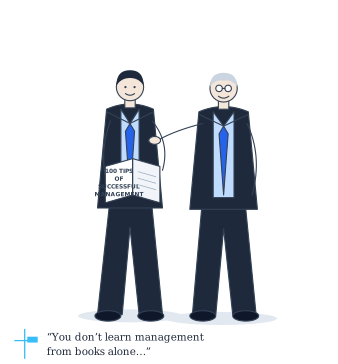
Drawn by us to help you understand the concept clearly, and verified to make sure it's accurate. For exams, practice from your NCERT textbook's own diagram.
What the Figure Shows
The NCERT figure is a simple, two-person illustration. It shows two men in business suits:
- A younger manager on the left, holding an open book titled "100 Tips of Successful Management". He appears to be reading or relying on the book.
- An older, experienced manager on the right, standing beside him. The older manager has a friendly hand placed on the younger manager’s shoulder, in a gesture of guidance and mentorship.
There are no other objects, panels, arrows, labels, or background settings. The scene is minimal — just the two figures and the book title. The caption reads: "You don't learn management from books alone…"
What It Teaches About Management
The figure drives home a key lesson about managerial skill development, especially relevant to middle management — the level described in the textbook as the link between top and lower management.
- Books provide theory, not practice. The younger manager’s book represents formal knowledge — tips, principles, and frameworks. But management, especially at the middle level, involves interpreting policies, assigning duties, motivating teams, and coordinating across departments. These tasks cannot be mastered by reading alone.
- Experience and mentorship are essential. The older manager’s hand on the shoulder symbolises on-the-job learning, guidance, and real-world wisdom. Middle managers must learn how to translate top management’s plans into action, handle people, and solve problems — skills that come from practice and from being mentored by seasoned professionals. …