Physical Education · Ch 5 — Sports and Nutrition
Importance Of Diet In Sports And Pre, During And Post Requirement
Importance Of Diet In Sports And Pre, During And Post Requirement
Importance of Diet in Sports - Pre, During and Post Requirement
Nutrition is a crucial aspect of both training and performance. Athletes should make appropriate dietary adjustments to perform better and to protect their long-term health, choosing the right foods and a diet built around variety. The concepts of nutrition and the basic principles of a balanced diet apply just as much on the sports field as anywhere else. A sportsperson needs to increase or decrease energy intake - and adjust the proportions of macronutrients and micronutrients - depending on the nature of the sport or game.
The diet of a sportsperson should aim to:
- maintain the body weight and body composition desired for their specific sport;
- maintain an adequate pool of nutrient levels in the body;
- follow healthy nutritional practices during training and competition; and
- continue those healthy practices during the off-season as well, when no competitions are taking place. …
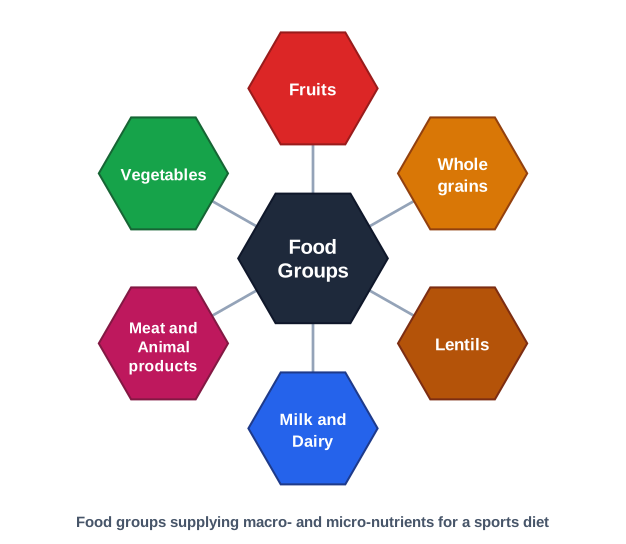
Drawn by us to help you understand the concept clearly, and verified to make sure it's accurate. For exams, practice from your NCERT textbook's own diagram.
A hub-and-spoke graphic organiser. A central hexagon labelled 'Food Groups' is surrounded by six coloured hexagons naming the main food groups a balanced sports diet draws on: Fruits, Whole grains, Lentils, Milk and Dairy, Meat and Animal products, and Vegetables. The layout is used to map which macronutrients (carbohydrates, proteins, fats) and micr …