Chemistry · Ch 8 — Aldehydes, Ketones and Carboxylic Acids
Nomenclature
Nomenclature
Common Names
Because carboxylic acids were among the very first organic compounds ever isolated, many of them are still known chiefly by their traditional, non-systematic names. These common names share a giveaway pattern: they all end in the suffix -ic acid, and the name itself is usually borrowed from the Latin or Greek word for the natural source the acid was first obtained from.
A few classic examples make the pattern clear:
- Formic acid, — first obtained from red ants (Latin formica, meaning ant).
- Acetic acid, — obtained from vinegar (Latin acetum, meaning vinegar).
- Butyric acid, — obtained from rancid butter (Latin butyrum, meaning butter).
IUPAC Names
The systematic name is built from the corresponding alkane in a simple two-step swap: drop the final -e of the alkane's name and replace it with the suffix -oic acid.
When numbering the carbon chain to place substituents, the carboxylic carbon is always taken as carbon 1 — it gets the lowest possible locant by convention, since it anchors the parent chain.
Naming acids with more than one carboxyl group. When a compound carries two or more groups, the numbering strategy changes slightly:
- Number the alkyl chain that is left over once the carboxyl groups are set aside.
- Show how many carboxyl groups are present using a multiplying prefix on the parent name — dicarboxylic acid, tricarboxylic acid, and so on. …
| Structure | Common name | IUPAC name |
|---|---|---|
| Formic acid | Methanoic acid | |
| Acetic acid | Ethanoic acid | |
| Propionic acid | Propanoic acid | |
| Butyric acid | Butanoic acid | |
| Isobutyric acid | 2-Methylpropanoic acid | |
| Oxalic acid | Ethanedioic acid | |
| Malonic acid | Propanedioic acid | |
| Succinic acid | Butanedioic acid | |
| Glutaric acid | Pentanedioic acid | |
| Adipic acid | Hexanedioic acid | |
| Tricarballylic acid or carballylic acid | Propane-1, 2, 3-tricarboxylic acid |
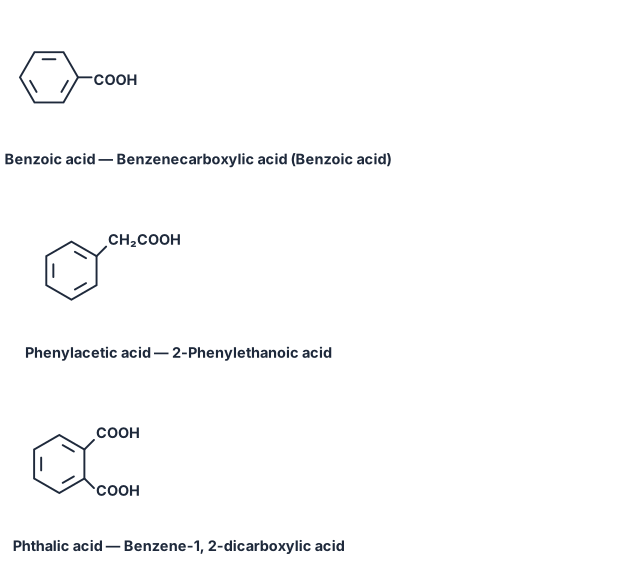
Drawn by us to help you understand the concept clearly, and verified to make sure it's accurate. For exams, practice from your NCERT textbook's own diagram.
Redrawn from the NCERT page with the structures, printed labels (COOH, CH2COOH) and reagent placement exactly as the textbook prints them. Every element of this display was checked against the printed page during the sweep's blind-judge verification pass, so wha …