Question 33 of 43
Q.Describe the structure of the heart of frog.
Telangana TsbieTelangana Board of Intermediate Education (Intermediate 1st Year) 2019Subjective· 4mImportance★★★★★
77% · 33/43 Questions
You're viewing a preview — the full solution, concept, methods & PYQ mapping are locked.
Start your 14-day free trial to unlock the full solution →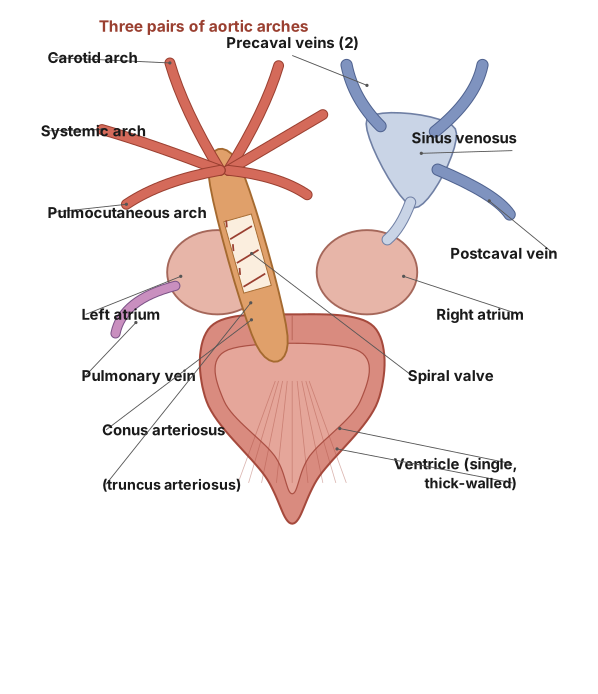
A frog's heart has three chambers — two atria and one ventricle — with accessory chambers (sinus venosus, conus arteriosus) that route mixed but largely separated oxygenated and deoxygenated blood streams to the body and the lungs/skin respectively.
Chambers, in order of blood flow:
- Sinus venosus: A thin-walled triangular chamber that receives deoxygenated blood from the body via the two precavals and one postcaval vein, and passes it into the right atrium.
- Right atrium: Receives deoxygenated blood from the sinus venosus.
- Left atrium: Receives oxygenated blood returning from the lungs and skin (cutaneous + pulmonary circulation) via the pulmonary vein.
- Ventricle: A single, thick-walled, muscular chamber (undivided) into which both atria open through a common atrioventricular aperture guarded by valves. Although the right (deoxygenated) and left (oxygenated) atrial blood streams enter the same ventricular cavity, the spongy internal musculature and near-simultaneous but slightly offset contraction limit complete mixing.
- Conus (truncus) arteriosus: Arises from the ventricle and contains a longitudinal spiral valve, which — together with differences in the timing/pressure of blood flow — helps direct more oxygen-poor blood into the pulmocutaneous arch (to the lungs and skin for oxygenation) and more oxygen-rich blood into the systemic (carotid + aortic) arches (to the body). …
Unlock everything free for 14 days
- Full step-by-step solutions
- Concept-first explanations
- Methods, shortcuts & mistakes
- PYQ mapping + timed mock tests
Full access for 14 days. No credit card required.