Q.Describe the structure of the heart of frog.
You're viewing a preview — the full solution, concept, methods & PYQ mapping are locked.
Start your 14-day free trial to unlock the full solution →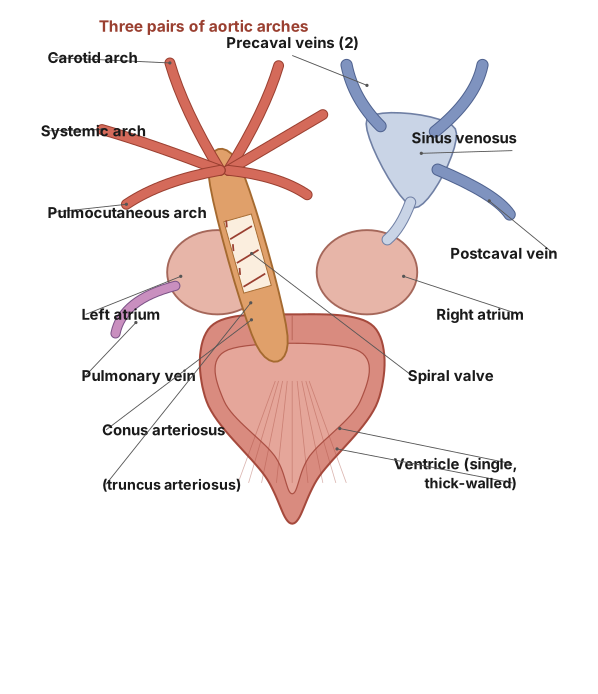
The frog's heart has three chambers (two atria, one ventricle) with an added sinus venosus and conus arteriosus, allowing it to receive blood from both the body and the lungs/skin and pump it out through three pairs of arterial arches.
Structure of the frog heart:
The heart lies in a pericardial cavity and is made up of the following parts:
-
Sinus venosus - a thin-walled triangular chamber on the dorsal side that receives deoxygenated blood from the body via the two precaval veins (superior venae cavae) and one postcaval vein (inferior vena cava). It opens into the right atrium.
-
Right atrium (auricle) - receives deoxygenated blood from the sinus venosus.
-
Left atrium (auricle) - receives oxygenated blood from the lungs and skin via the pulmonary vein.
-
Ventricle - a single, thick-walled, muscular chamber into which both atria open (through a common atrioventricular aperture). Oxygenated and deoxygenated blood mix here to a limited extent, though the mixing is minimised functionally by the timing of atrial contraction and internal ridges (trabeculae).
…
Unlock everything free for 14 days
- Full step-by-step solutions
- Concept-first explanations
- Methods, shortcuts & mistakes
- PYQ mapping + timed mock tests
Full access for 14 days. No credit card required.