Q.Describe the structure of the heart of a frog.
You're viewing a preview — the full solution, concept, methods & PYQ mapping are locked.
Start your 14-day free trial to unlock the full solution →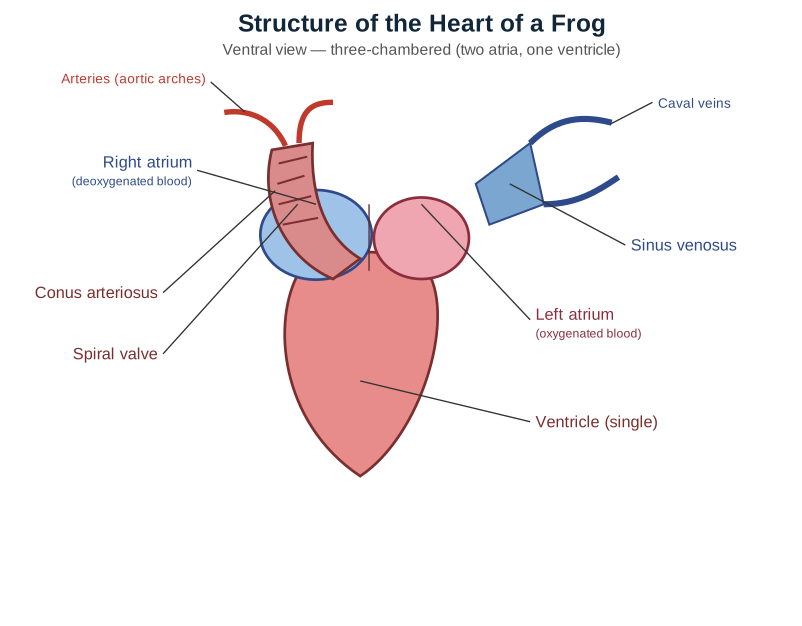
A frog's heart is three-chambered - two atria and one ventricle - with a sinus venosus behind and a conus arteriosus in front; the single ventricle causes partial mixing of oxygenated and deoxygenated blood.
Structure of the heart of a frog:
- The heart of a frog is a muscular organ situated mid-ventrally in the anterior part of the body cavity, enclosed in a two-layered membrane called the PERICARDIUM.
- It is THREE-CHAMBERED, consisting of two atria (auricles) and one ventricle, together with two accessory chambers - the sinus venosus and the conus arteriosus.
Chambers:
- Atria (auricles) - two:
-
The RIGHT ATRIUM is larger and receives DEOXYGENATED blood from the body through the sinus venosus.
-
The LEFT ATRIUM is smaller and receives OXYGENATED blood from the lungs and skin (through the pulmocutaneous veins / left precaval).
-
The two atria are separated by an inter-atrial septum and open into the ventricle by a common auriculo-ventricular aperture guarded by valves.
- Ventricle - one (single):
- A single, thick-walled, muscular chamber with spongy inner walls (columnae carneae) that reduce the mixing of the two kinds of blood to some extent.
- Since there is only ONE ventricle, oxygenated and deoxygenated blood get PARTIALLY MIXED here.
Accessory chambers:
3. Sinus venosus: …
Unlock everything free for 14 days
- Full step-by-step solutions
- Concept-first explanations
- Methods, shortcuts & mistakes
- PYQ mapping + timed mock tests
Full access for 14 days. No credit card required.