Q.(i) What is metastasis?
You're viewing a preview — the full solution, concept, methods & PYQ mapping are locked.
Start your 14-day free trial to unlock the full solution →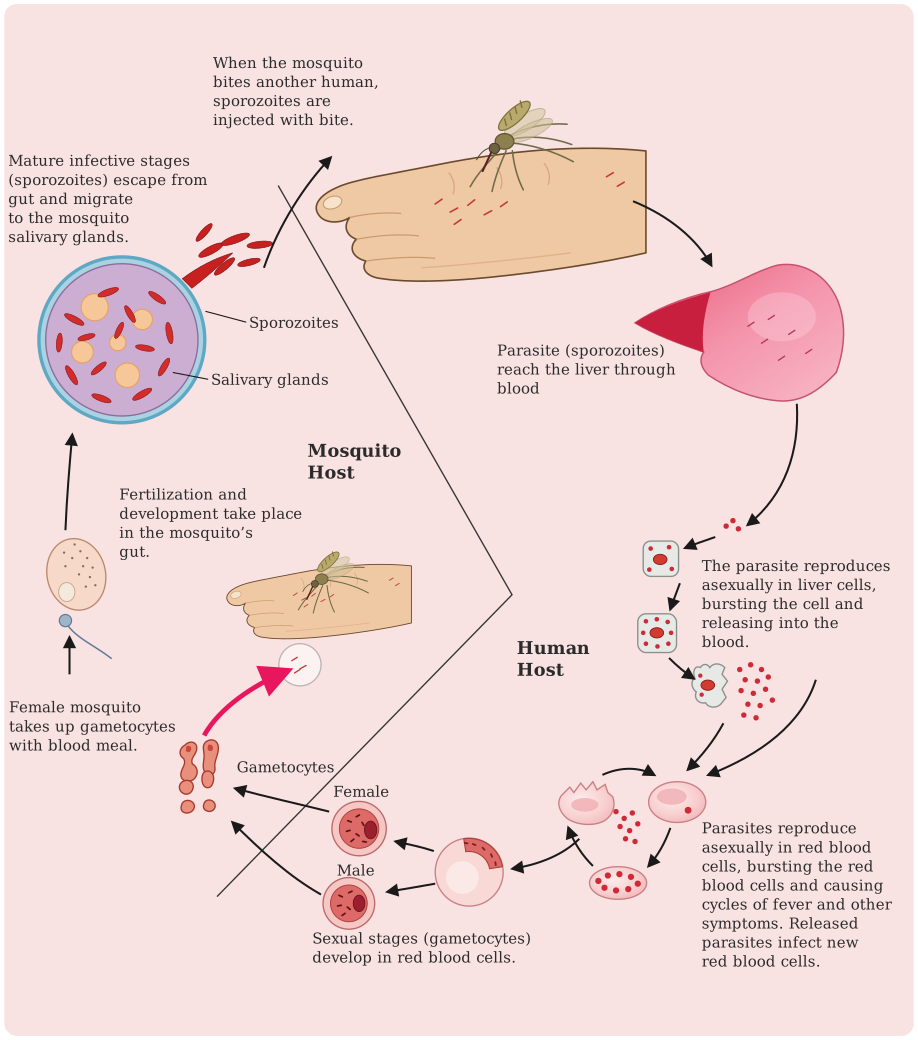
Metastasis is how cancer spreads to distant organs, forming secondary tumours, and malignant tumours (unlike benign ones) invade and metastasise; several tests can diagnose cancer. (OR: immunity fights disease, some drugs cause hallucinations, and the malaria parasite has a complex life cycle alternating between humans and the Anopheles mosquito.)
- Metastasis: the phenomenon in which cancerous (malignant) cells break away from the primary tumour, travel through the blood or lymphatic system, and lodge in a new, distant part of the body, where they multiply and form a new, secondary tumour. This ability to invade and spread is the most dangerous property of cancer cells.
- Benign vs malignant tumour:
| Benign tumour | Malignant tumour |
|---|---|
| Grows slowly, stays confined/localised, usually encapsulated | Grows rapidly and uncontrollably |
| Does not invade neighbouring tissue and does not metastasise | Invades surrounding normal tissue and metastasises to distant organs |
| Usually not life-threatening; removal is often curative | Life-threatening, can cause organ failure/death |
(iii) Two tests for cancer diagnosis: biopsy and histopathological (microscopic) study of the suspected tissue; and imaging techniques such as radiography (X-rays), CT scan, MRI or PET scan (blood tests for specific tumour biomarkers are also used).
OR alternative:
- Immunity: the overall ability/capacity of the body to defend itself against foreign, disease-causing organisms (pathogens) and other harmful substances (antigens); it is broadly of two types, innate immunity (present from birth, non-specific) and acquired immunity (develops after exposure to a pathogen/antigen, pathogen-specific, with memory).
- Two hallucinogenic drugs: cannabinoid compounds obtained from the plant Cannabis sativa (marijuana/hashish/charas/ganja - acting on cannabinoid receptors in the brain), and atropine-type alkaloids from Atropa belladonna and Datura (LSD, lysergic acid diethylamide, is another commonly cited synthetic hallucinogen).
- Life cycle of the malaria parasite (Plasmodium) - shown as a labelled sequence in place of a hand-drawn figure, since only text can be submitted here:
- An infected female Anopheles mosquito bites a human and injects sporozoites into the blood.
- Sporozoites reach the liver, multiply inside liver cells, and release merozoites into the blood. …
Unlock everything free for 14 days
- Full step-by-step solutions
- Concept-first explanations
- Methods, shortcuts & mistakes
- PYQ mapping + timed mock tests
Full access for 14 days. No credit card required.