Biology · Ch 19 — Chemical Coordination and Integration
Adrenal Gland
Adrenal Gland
The body has one pair of adrenal glands, with one gland sitting above each kidney. Each gland is made of two different kinds of tissue: the adrenal medulla at the centre and the adrenal cortex forming the outer region around it. These two parts secrete different hormones and function almost as two glands in one.
Adrenal cortex
The cortex is organised into three layers: the zona reticularis (innermost), the zona fasciculata (middle) and the zona glomerulosa (outermost). It secretes a family of hormones collectively called corticoids, which fall into two main groups.
Glucocorticoids are the corticoids involved in carbohydrate metabolism, and cortisol is the main glucocorticoid in the body. Their actions include:
- Stimulating gluconeogenesis (making glucose), lipolysis (breakdown of fats) and proteolysis (breakdown of proteins).
- Inhibiting the uptake and use of amino acids by cells.
- Producing anti-inflammatory effects and suppressing the immune response (this is particularly true of cortisol).
- Stimulating red blood cell production.
- Helping maintain the cardiovascular system and normal kidney function (a role of cortisol).
Mineralocorticoids are the corticoids that regulate the balance of water and electrolytes, and aldosterone is the main mineralocorticoid. Aldosterone acts mainly on the renal tubules, where it stimulates the reabsorption of sodium ions (Na+) and water while promoting the excretion of potassium ions (K+) and phosphate ions. Through this, aldosterone helps maintain electrolyte balance, body-fluid volume, osmotic pressure and blood pressure.
The cortex also secretes small amounts of androgenic (male-type) steroids, which contribute to the growth of axial hair, pubic hair and facial hair during puberty.
Underactivity of the cortex: If the adrenal cortex produces too little hormone, carbohydrate metabolism is disturbed, causing acute weakness and fatigue. This condition is known as Addison's disease.
Adrenal medulla
The medulla secretes two hormones: adrenaline (also called epinephrine) and noradrenaline (also called norepinephrine). Together these are known as the catecholamines. …
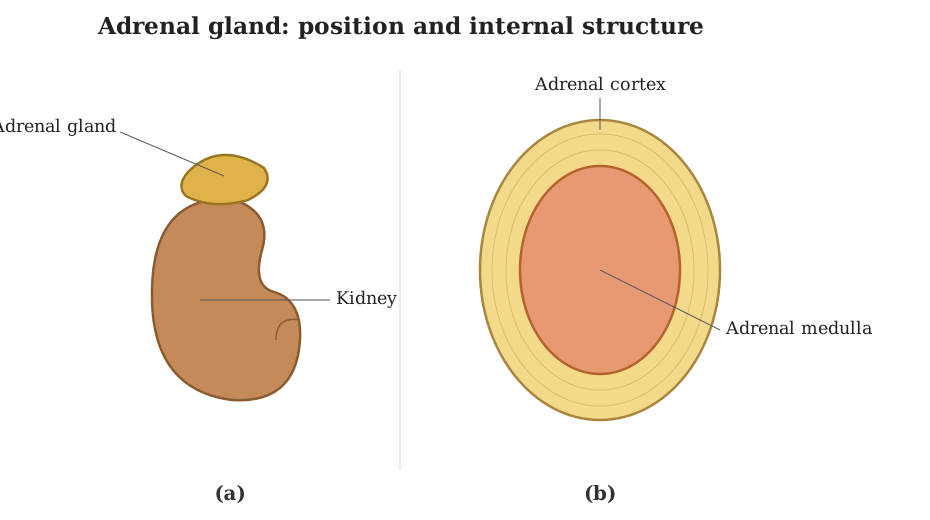
Drawn by us to help you understand the concept clearly, and verified to make sure it's accurate. For exams, practice from your textbook's own diagram.
This two-part figure shows both where the adrenal gland lies and what it looks like inside. Panel (a) shows that one adrenal (suprarenal) gland sits like a cap on the upper part of each kidney. Panel (b) is a section through the gland, revealing that it is built from two different tissues: an outer layer, the adrenal cortex, and an inner core, the adrenal medulla. The two tissues secrete different hormones — the cortex produces the corticoids (glucocorticoids such as cortisol, which manage carbohydrate metabolism and the stress response, and mineralocorticoids such as aldosterone, which balance salts and water), while the medulla produces the catecholamines adrenaline …