Biology · Ch 19 — Chemical Coordination and Integration
The Pituitary Gland
The Pituitary Gland
The pituitary gland lies within a small bony pocket of the skull called the sella tursica and is joined to the hypothalamus above it by a stalk. Small though it is, it directs many other glands, and its anatomy is neatly divided into two main parts: the adenohypophysis and the neurohypophysis.
The parts of the gland
- The adenohypophysis is itself made of two portions — the pars distalis and the pars intermedia.
- The pars distalis is what is commonly called the anterior pituitary.
- The pars intermedia is a separate zone, but in humans it is almost fused with the pars distalis rather than standing apart.
- The neurohypophysis, also called the pars nervosa or posterior pituitary, does not manufacture its own hormones; it stores and releases hormones that are actually made in the hypothalamus and carried down to it along the axons.
Hormones of the anterior pituitary (pars distalis)
The pars distalis produces six hormones:
- Growth hormone (GH)
- Prolactin (PRL)
- Thyroid stimulating hormone (TSH)
- Adrenocorticotrophic hormone (ACTH)
- Luteinizing hormone (LH)
- Follicle stimulating hormone (FSH)
Their roles are as follows:
- Growth hormone governs the overall growth of the body.
- Prolactin controls the growth of the mammary glands and the formation of milk within them.
- TSH drives the thyroid gland to make and release its thyroid hormones.
- ACTH stimulates the adrenal cortex to make and secrete steroid hormones known as glucocorticoids.
- LH and FSH together act on the gonads, and because of this they are jointly called gonadotrophins:
- In males, LH stimulates the testis to make and secrete androgens, while FSH together with those androgens governs spermatogenesis (sperm formation).
- In females, LH triggers ovulation of the fully ripe follicles (the graafian follicles) and then maintains the corpus luteum, the structure left behind from the graafian follicle after ovulation. FSH promotes the growth and development of the ovarian follicles.
The hormone of the pars intermedia
The pars intermedia secretes just a single hormone, melanocyte stimulating hormone (MSH). It acts on the melanocytes — the melanin-containing cells — and thereby regulates the pigmentation of the skin.
Disorders linked to growth hormone
Because growth hormone shapes body growth, abnormal amounts of it cause recognisable disorders:
- Gigantism — an over-secretion of GH drives abnormal, excessive growth of the body.
- Pituitary dwarfism — too little GH leaves growth stunted.
- Acromegaly — excess GH in adults, especially in middle age, causes severe disfigurement, particularly of the face. It can lead to serious complications and, if left unchecked, premature death. It is difficult to detect in its early stages and often stays unnoticed for many years, until the changes in a person's external features become obvious.
Hormones of the posterior pituitary (neurohypophysis)
The posterior pituitary stores and releases two hypothalamic hormones, oxytocin and vasopressin: …
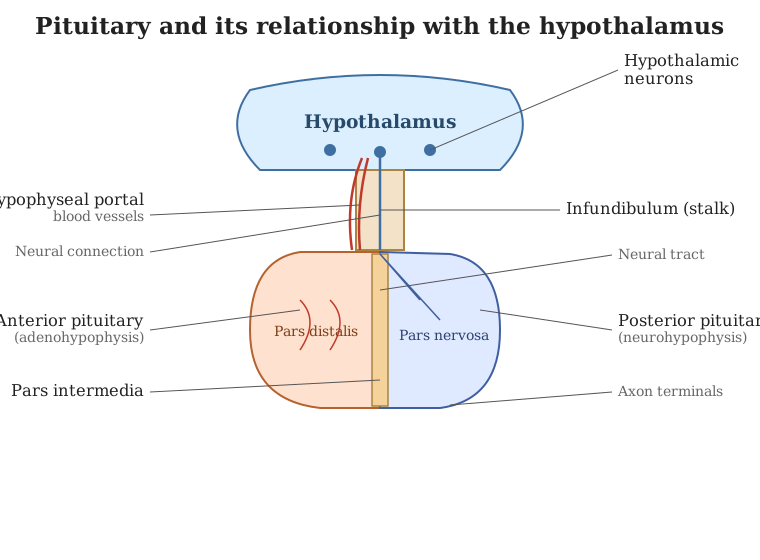
Drawn by us to help you understand the concept clearly, and verified to make sure it's accurate. For exams, practice from your textbook's own diagram.
This diagram shows the pituitary gland and how the hypothalamus above it keeps it under control. The pituitary sits in a bony seat (the sella turcica) and has two parts: the anterior pituitary (adenohypophysis), which includes the pars distalis and the pars intermedia, and the posterior pituitary (neurohypophysis), the pars nervosa. The hypothalamus is joined to the pituitary by a stalk and by a special set of blood vessels, the hypophyseal portal system. Through these vessels the hypothalamus sends releasing and inhibiting hormones that switch the anterior pituitary's hormones on and off. The posterior pituitary, by contrast, makes no hormones of its own — nerve fibres from the hypothalamus run down into it, and it simply stores and releases two hypothalamic hormones, oxytoci …