Biology · Ch 5 — Morphology of Flowering Plants
Structure of a Dicotyledonous Seed
Structure of a Dicotyledonous Seed
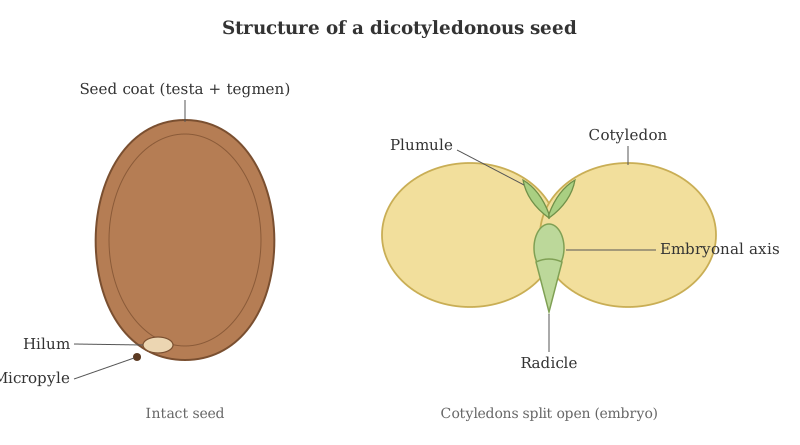
The outermost covering of a dicotyledonous seed is the seed coat, which is made up of two layers:
- the outer testa, and
- the inner tegmen.
On the seed coat there is a scar called the hilum, which marks the place through which the developing seed was attached to the fruit. Just above the hilum is a small pore known as the micropyle.
Within the seed coat lies the embryo, which consists of an embryonal axis and two cotyledons. The cotyledons are often fleshy and full of reserve food materials. At the two ends of the embryonal axis are present:
- the radicle, the embryonic root, and
- the plumule, the embryonic shoot. …
Drawn by us to help you understand the concept clearly, and verified to make sure it's accurate. For exams, practice from your textbook's own diagram.
The figure shows the internal make-up of a dicot seed, such as gram or pea. The seed is wrapped in a protective seed coat with two layers: a tough outer testa and a thinner inner tegmen. On the coat is a scar called the hilum, marking where the seed was attached to the fruit, and beside it a tiny pore, the micropyle. Inside lies the embryo, made of two fleshy cotyledons that usually store food, joined to a short embryonal axis. One end of this axis is the radicle, the future root that projects below …