Q.With the help of a suitable example, explain what happens during an antigen-antibody reaction.
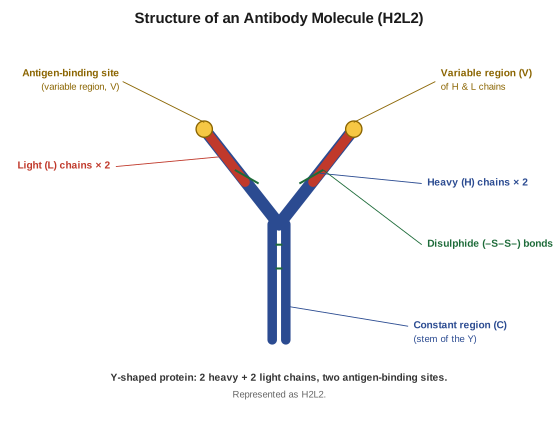
An antigen-antibody reaction occurs when an antibody's binding site, shaped to fit one specific antigen's epitope, physically binds that antigen. This can protect the body in different ways — neutralising a toxin or virus directly, causing agglutination (clumping) of antigen-bearing particles so they are more easily removed, or marking a pathogen for destruction by phagocytic cells (opsonisation).
A clear everyday example is ABO blood grouping: red blood cells carry the A and/or B antigen on their surface, and blood plasma naturally contains antibodies against whichever antigen a person's own cells lack. If blood of an incompatible group is transfused, the recipient's antibodies immediately bind the donor red cells' antigens, causing them to clump together (agglutinate) — which is exactly why blood group compatibility is always checked before a transfusion.
An antigen-antibody reaction is the specific binding between a matching antigen and antibody. Example: in an incompatible blood transfusion, plasma antibodies bind the donor red cells' surface antigens and cause visible agglutination (clumping), which is why blood groups must be matched before transfusion.
Unlock everything free for 14 days
- Full step-by-step solutions
- Concept-first explanations
- Methods, shortcuts & mistakes
- PYQ mapping + timed mock tests
Full access for 14 days. No credit card required.