Psychology · Ch 8 — Motivation and Emotion
Types of Motives
Types of Motives
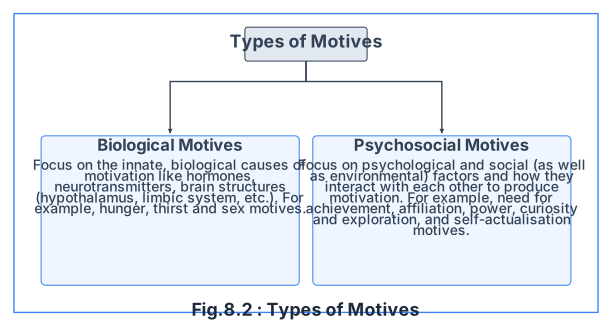
Psychologists broadly sort human motives into two categories. Biological (or physiological) motives are guided mainly by the physiological mechanisms of the body — hunger, thirst and sex are the classic examples. Psychosocial motives, on the other hand, are mostly learned or acquired through a person's ongoing interaction with their social environment — family, friends, neighbourhood and community all play a part in shaping them; the need for achievement, affiliation, power, curiosity, and self-actualisation are examples. It is important not to treat this as a rigid, either-or split: the two kinds of motives are interdependent.
Drawn by us to help you understand the concept clearly, and verified to make sure it's accurate. For exams, practice from your NCERT textbook's own diagram.
Fig.8.2: Types of Motives — a flowchart branching from 'Types of Motives' into 'Biological Motives' and 'Psychosocial Motives', each with its own defining examples. Own-illustrated for this platform from the real NCERT page's own facts (composition, labels, and layout are recreated; the specific artistic ren …
…