Numerical Problems · Q9
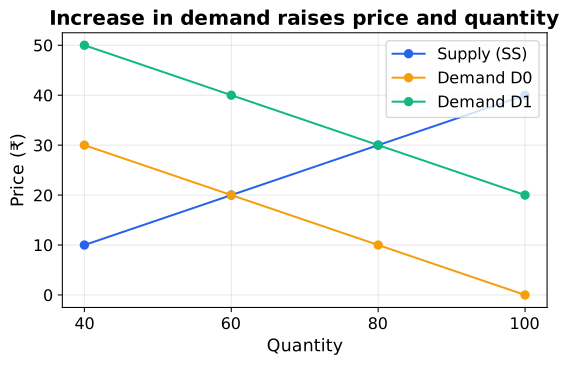
Q.Continuing from the previous market (), suppose demand rises to . Find the new equilibrium and state the effect of the increase in demand on price and quantity.
ChseodishaTextbookSubjectiveImportance★★★★★est
45% · 9/20 Questions
✓ Free question
Set the new demand equal to supply:
Substitute back:
Both sides equal 80, confirming the result. The earlier equilibrium was P = ₹20, Q = 60; now P = ₹30, Q = 80.
Interpretation. With supply unchanged, a rightward shift of demand raises both the equilibrium price (from ₹20 to ₹30) and the equilibrium quantity (from 60 to 80). This illustrates the rule that demand moves price and quantity in the same direction.
✓Final answer
New equilibrium is price ₹30 and quantity 80 units; the increase in demand raises both price and quantity.
Unlock everything free for 14 days
- Full step-by-step solutions
- Concept-first explanations
- Methods, shortcuts & mistakes
- PYQ mapping + timed mock tests
Full access for 14 days. No credit card required.