Question of 96
Q.Draw a neat diagram of DNA double helix.
Goa GbshseGBSHSE Class 12 Board Exam 2018Subjective· 2mImportance★★★★★
0% · 0/96 Questions
You're viewing a preview — the full solution, concept, methods & PYQ mapping are locked.
Start your 14-day free trial to unlock the full solution →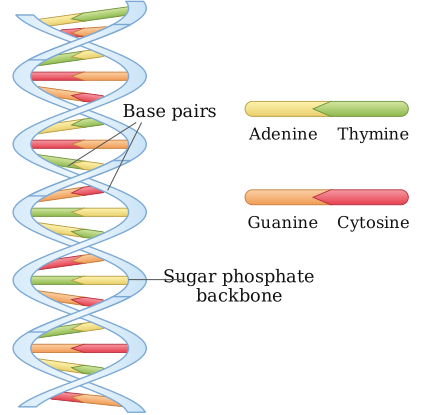
The Watson–Crick model describes DNA as two right-handed, antiparallel polynucleotide chains coiled around each other, with the sugar-phosphate backbone outside and complementary base pairs (joined by hydrogen bonds) stacked inside like the rungs of a twisted ladder.
(This is a 'draw a neat diagram' question; the key structural features to include are listed below.)
- Two polynucleotide chains, each made of a sugar (deoxyribose)–phosphate backbone with nitrogenous bases projecting inward.
- The two strands run antiparallel — one strand runs 5'→3', the other 3'→5'.
- They coil around a common axis to form a right-handed double helix.
- Bases pair specifically by hydrogen bonding: Adenine pairs with Thymine (2 hydrogen bonds); Guanine pairs with Cytosine (3 hydrogen bonds). This is called complementary base pairing. …
Unlock everything free for 14 days
- Full step-by-step solutions
- Concept-first explanations
- Methods, shortcuts & mistakes
- PYQ mapping + timed mock tests
Full access for 14 days. No credit card required.