Question of 53
Q.What are the characteristics of Eukaryotic cells ? OR Describe the various steps of catalytic cycle of an Enzyme action.
Haryana BsehBoard of School Education Haryana (Senior Secondary Part-I / Class 11) 2019Subjective· 5mImportance★★★★★
0% · 0/53 Questions
You're viewing a preview — the full solution, concept, methods & PYQ mapping are locked.
Start your 14-day free trial to unlock the full solution →Eukaryotic cells are defined by a true membrane-bound nucleus and numerous membrane-bound organelles that compartmentalise cellular functions, unlike the simpler organisation of prokaryotic cells.
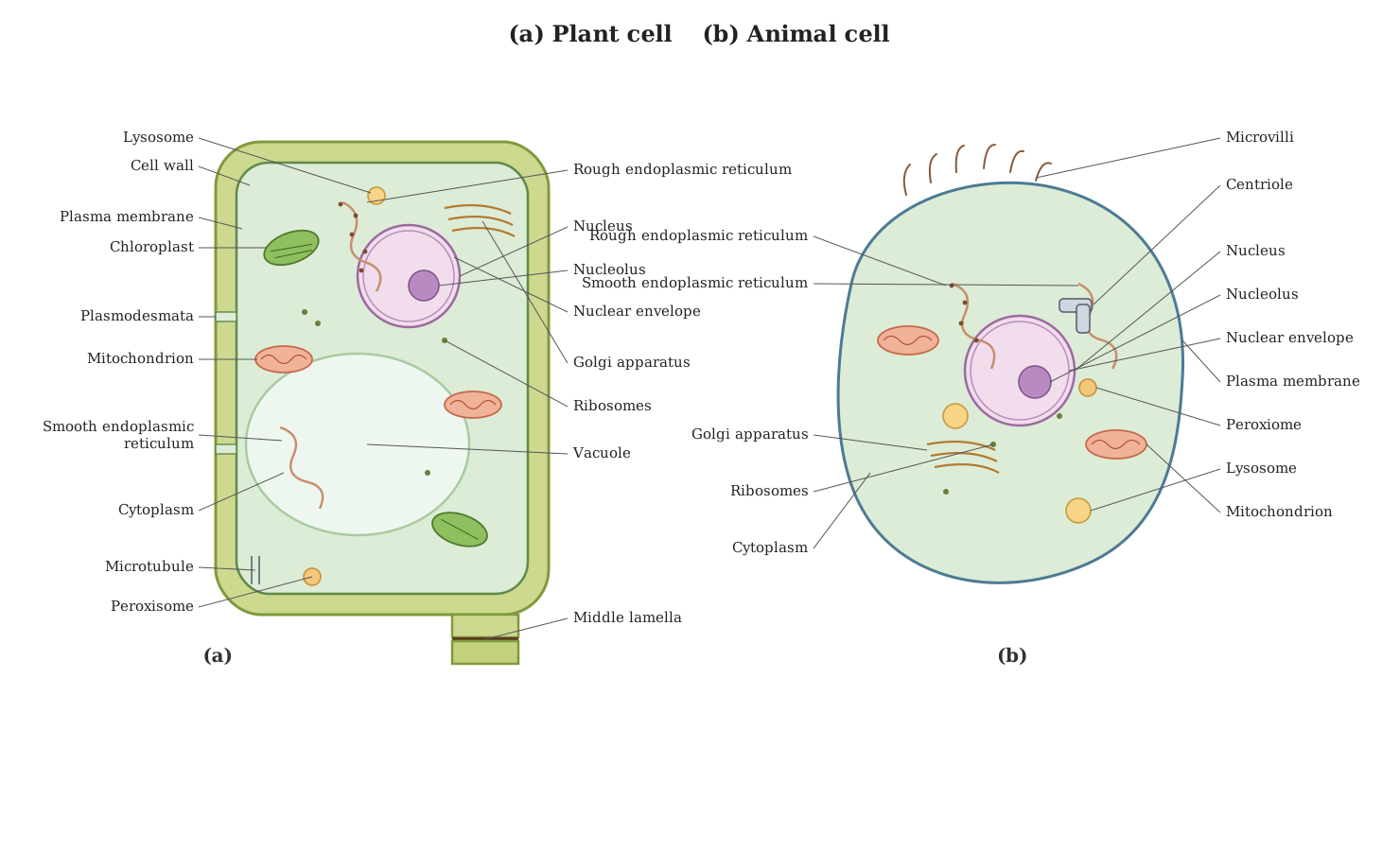
Characteristics of Eukaryotic cells:
- True nucleus: possess a well-organised nucleus bound by a double-membrane nuclear envelope (with nuclear pores), containing chromatin (DNA + histone proteins) and a nucleolus.
- Membrane-bound organelles: the cytoplasm is compartmentalised into distinct, membrane-bound organelles, including:
- Endoplasmic reticulum (rough and smooth) — protein/lipid synthesis.
- Golgi apparatus — packaging and secretion.
- Mitochondria — site of aerobic respiration/ATP generation, bounded by a double membrane, contains its own DNA (semi-autonomous).
- Lysosomes — contain hydrolytic enzymes for intracellular digestion.
- Peroxisomes/microbodies.
- Ribosomes: larger 80S type (60S + 40S subunits), found free in the cytoplasm or attached to the rough ER.
- Cytoskeleton: a network of microtubules, microfilaments and intermediate filaments providing mechanical support, shape, and enabling movement/transport within the cell.
- Cell size: generally larger (5–100 μm) than prokaryotic cells (1–10 μm). …
Unlock everything free for 14 days
- Full step-by-step solutions
- Concept-first explanations
- Methods, shortcuts & mistakes
- PYQ mapping + timed mock tests
Full access for 14 days. No credit card required.