Q.(a) Differentiate between plant and animal cell. OR
You're viewing a preview — the full solution, concept, methods & PYQ mapping are locked.
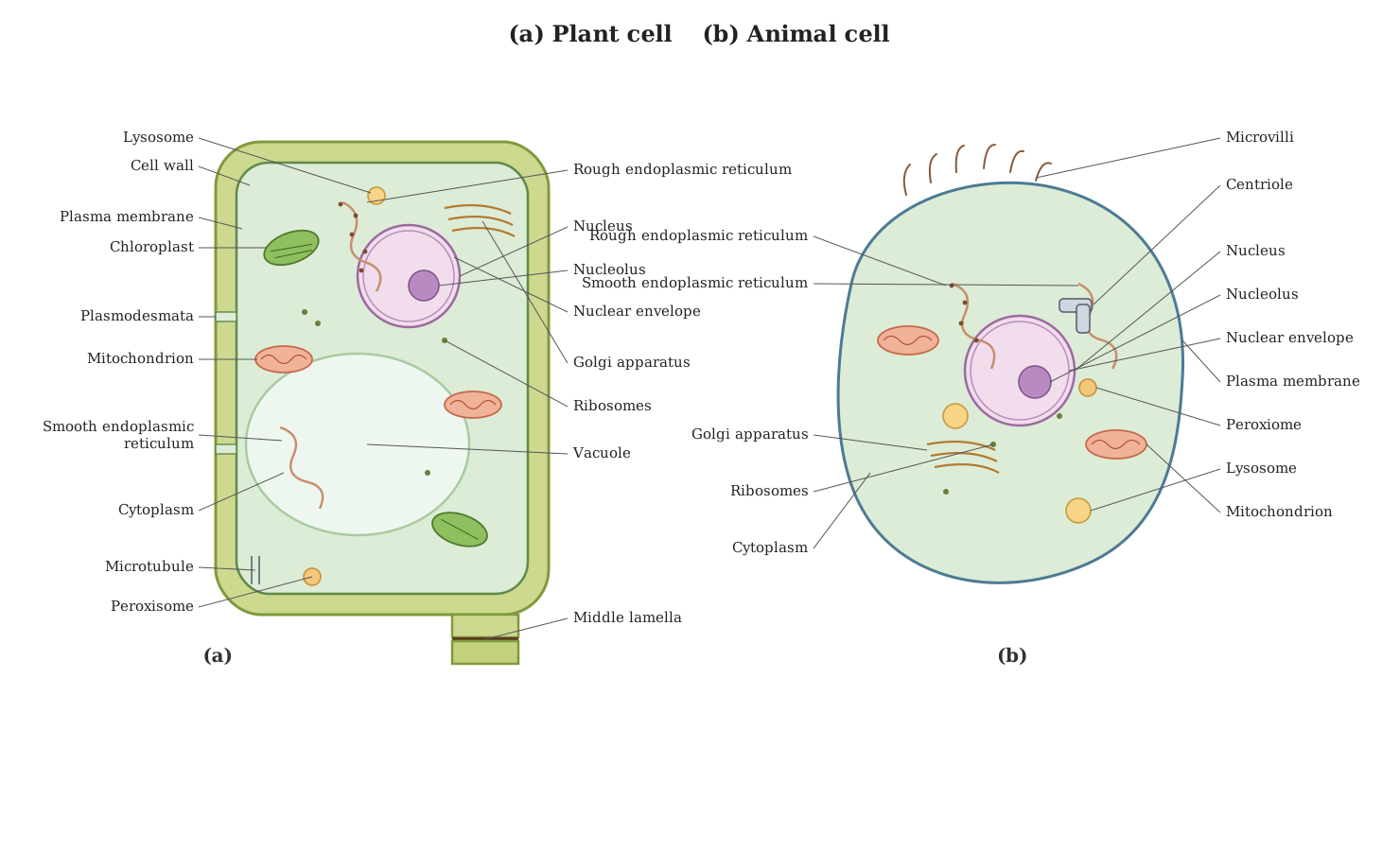
Start your 14-day free trial to unlock the full solution →The key structural differences between plant and animal cells are the presence (in plants) versus absence (in animals) of a cell wall, plastids, and a large central vacuole, along with the reverse presence pattern for centrioles.
(a) Difference between plant and animal cell (answering the primary part of this question):
-
Cell wall: Plant cells possess a rigid, non-living cell wall made mainly of cellulose, lying outside the plasma membrane, which gives the cell a fixed shape and provides mechanical support. Animal cells lack a cell wall entirely; only the flexible plasma membrane bounds them, giving them a more variable, often irregular or rounded shape.
-
Plastids: Plant cells contain plastids (chloroplasts for photosynthesis, chromoplasts for pigmentation, leucoplasts for storage). Animal cells never possess plastids.
-
Vacuole: Plant cells typically have one large, prominent, permanent central vacuole (bounded by the tonoplast) that occupies most of the cell's volume and maintains turgor pressure. Animal cells, if they have vacuoles at all, have small, numerous, and usually temporary ones.
-
Centrioles: Animal cells possess a pair of centrioles within the centrosome, which organise the spindle fibres during cell division. Higher plant cells generally lack centrioles (spindle formation occurs without them), though centrioles are present in some lower plants (e.g. certain algae).
-
Lysosomes: Lysosomes are common and well-defined in animal cells (involved in intracellular digestion). In plant cells, the large central vacuole often performs many lysosome-like digestive/storage functions, and distinct lysosomes are comparatively rare.
…
Unlock everything free for 14 days
- Full step-by-step solutions
- Concept-first explanations
- Methods, shortcuts & mistakes
- PYQ mapping + timed mock tests
Full access for 14 days. No credit card required.