Q.What is Cell? Explain in brief the structure of Eukaryotic cell with suitable diagram. OR What are Proteins? Explain in brief the structure of proteins.
You're viewing a preview — the full solution, concept, methods & PYQ mapping are locked.
Start your 14-day free trial to unlock the full solution →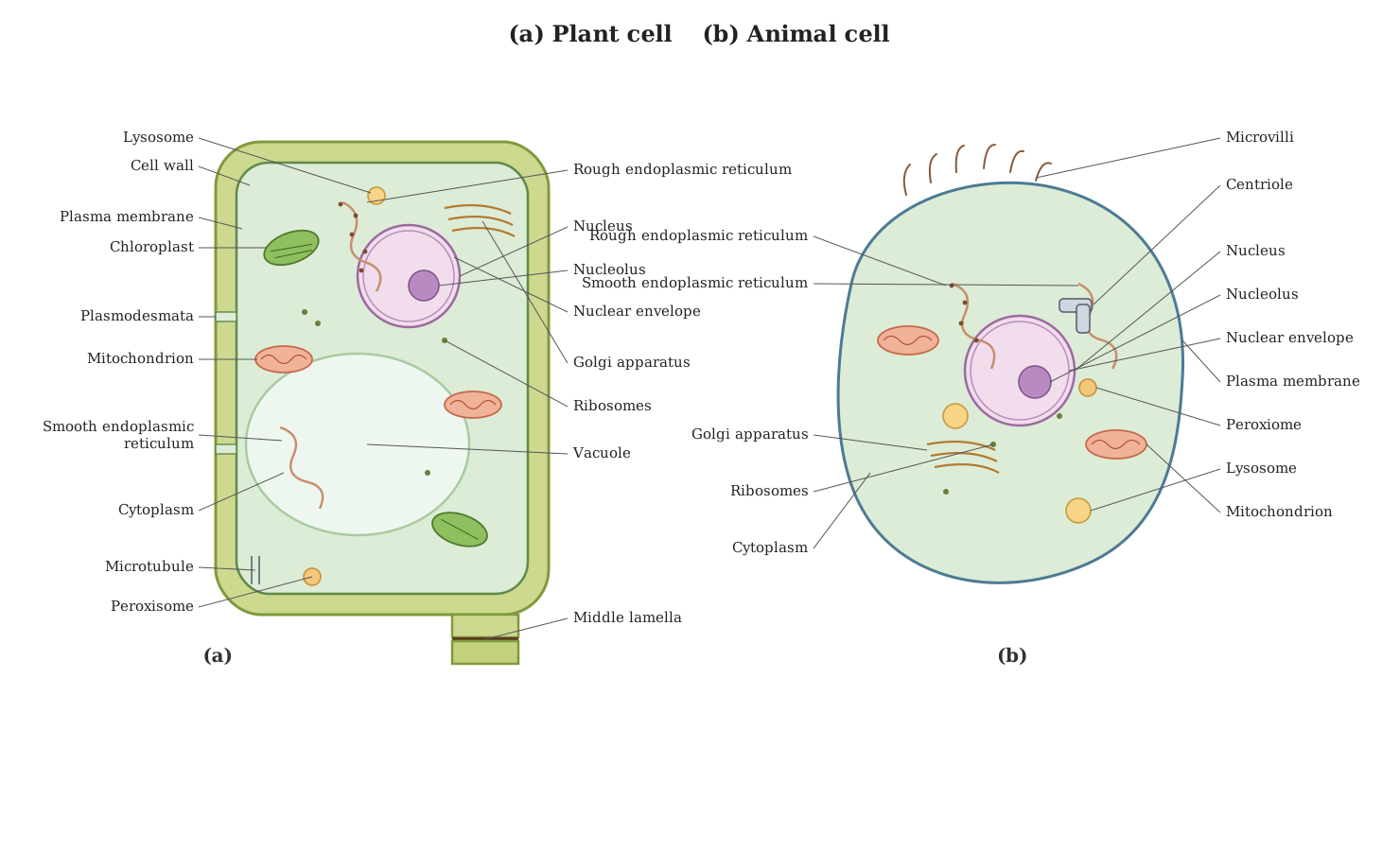
The cell is the smallest living unit; a eukaryotic cell is distinguished from a prokaryotic cell by having a true nucleus enclosed in a nuclear envelope and a range of membrane-bound organelles that divide the cell into specialised compartments.
What is a Cell?
The cell is the basic structural and functional unit of all living organisms (the Cell Theory: all organisms are composed of cells, and cells arise only from pre-existing cells). Organisms may be unicellular (a single cell performs all functions, e.g. Amoeba, Paramecium) or multicellular (division of labour among many cells, e.g. humans).
Structure of a Eukaryotic Cell
A eukaryotic cell is much larger and more complex than a prokaryotic cell and shows three broad regions:
- Plasma membrane — the outer, selectively permeable lipid-bilayer boundary that regulates the movement of substances into and out of the cell.
- Cytoplasm — the semi-fluid matrix between the plasma membrane and the nucleus, in which all the organelles are suspended. Key organelles include:
- Nucleus — enclosed by a double-membraned nuclear envelope with nuclear pores; contains the nucleolus and chromatin (DNA + histone proteins), the control centre of the cell.
- Endoplasmic reticulum (ER) — a network of membranous tubules; Rough ER (studded with ribosomes) makes proteins, Smooth ER makes lipids.
- Golgi apparatus — stacks of flattened sacs (cisternae) that package and modify proteins/lipids received from the ER for secretion or use elsewhere.
- Mitochondria — double-membraned, the "powerhouse of the cell," site of aerobic respiration and ATP production; the inner membrane is folded into cristae.
- Ribosomes — non-membranous granules (free or ER-bound) that are the site of protein synthesis.
- Lysosomes — membrane-bound vesicles containing hydrolytic enzymes for intracellular digestion.
- Plastids and a large central vacuole are additionally present in plant cells (not in animal cells). …
Unlock everything free for 14 days
- Full step-by-step solutions
- Concept-first explanations
- Methods, shortcuts & mistakes
- PYQ mapping + timed mock tests
Full access for 14 days. No credit card required.