Q.Draw the ultra structure of plant cell.
You're viewing a preview — the full solution, concept, methods & PYQ mapping are locked.
Start your 14-day free trial to unlock the full solution →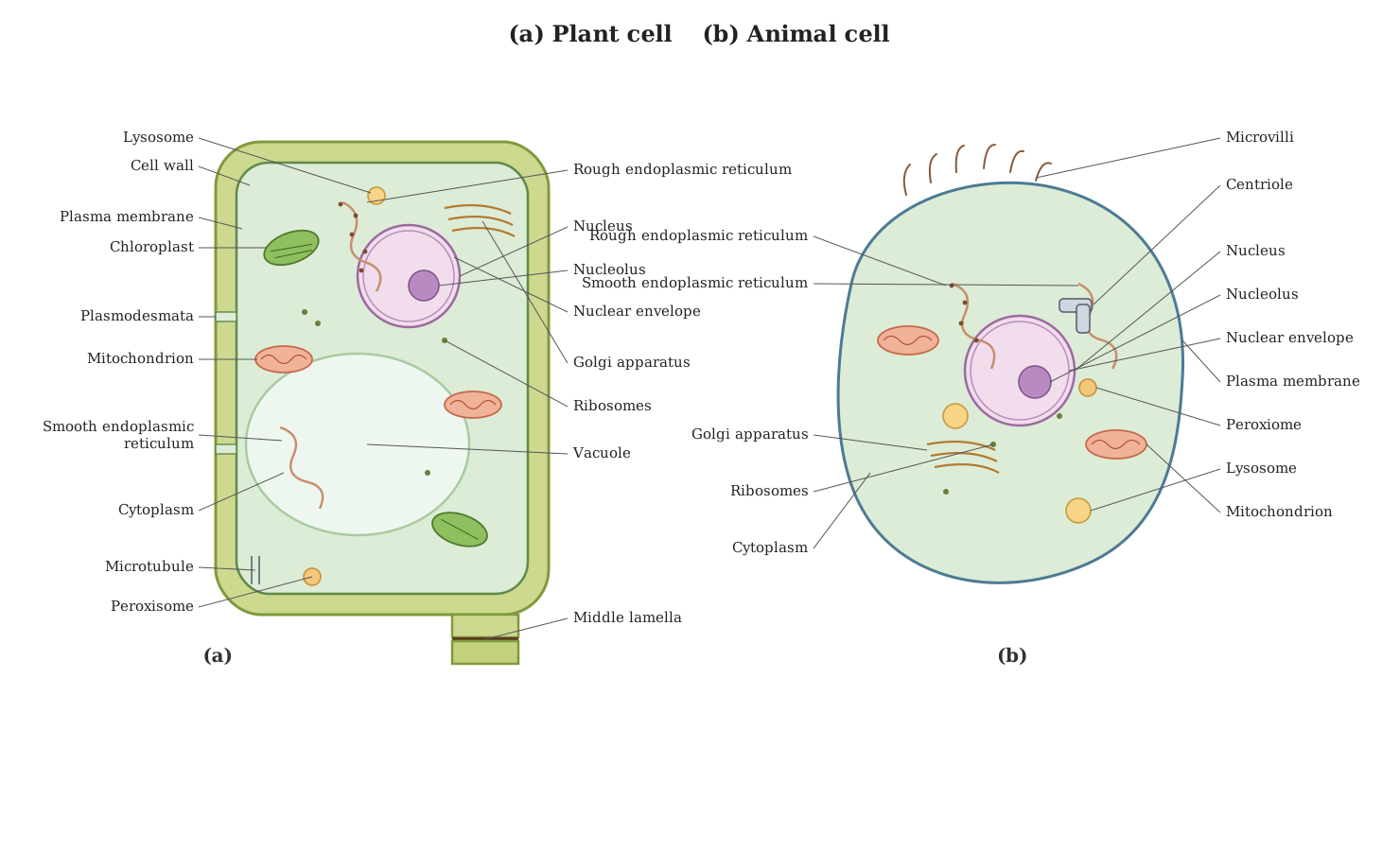
A plant cell's ultrastructure diagram must show and label the cell wall, plasma membrane, nucleus, ER, Golgi apparatus, mitochondria, plastids, ribosomes, cytoskeleton, and a large central vacuole; since a hand-drawn image cannot be produced in text, every structure the diagram needs is described here.
Note on this answer: this question asks the student to draw and label the ultrastructure of a plant cell. A visual drawing cannot be produced in this text-based answer format, so instead, every organelle/structure that a correctly labelled diagram must include is listed here in detail:
-
Cell wall: the outermost, rigid layer made primarily of cellulose, providing structural support and shape; it is a feature unique to plant cells (absent in animal cells).
-
Plasma membrane: the selectively permeable membrane lying just inside the cell wall, enclosing the cytoplasm.
-
Nucleus: the largest organelle, bounded by a double-membraned nuclear envelope (with nuclear pores), containing chromatin (DNA + protein) and one or more nucleoli (site of ribosomal RNA synthesis).
-
Endoplasmic reticulum (ER): a network of membranous tubules/sacs; rough ER (studded with ribosomes, involved in protein synthesis) and smooth ER (lacking ribosomes, involved in lipid synthesis).
-
Golgi apparatus (dictyosomes in plants): stacks of flattened membranous sacs (cisternae) involved in processing, packaging, and secretion of proteins and lipids.
-
Mitochondria: double-membraned organelles (outer membrane smooth, inner membrane folded into cristae) that are the site of aerobic respiration and ATP production.
-
Plastids: unique to plant cells; include chloroplasts (containing chlorophyll, with internal grana/thylakoid stacks embedded in stroma, the site of photosynthesis), chromoplasts (pigmented), and leucoplasts (colourless, storage).
-
Vacuole: plant cells characteristically have one large, central vacuole (unlike the small vacuoles of animal cells), bounded by a membrane called the tonoplast, occupying most of the cell volume and maintaining turgor pressure.
…
Unlock everything free for 14 days
- Full step-by-step solutions
- Concept-first explanations
- Methods, shortcuts & mistakes
- PYQ mapping + timed mock tests
Full access for 14 days. No credit card required.