Biology · Ch 12 — Ecosystem
Decomposition
Decomposition
Decomposition is the process by which the complex organic matter in dead plants and animals — leaves, roots, animal bodies, waste — is broken down into simpler inorganic substances. It is the opposite of production: where producers build organic matter, decomposers take it apart. Without decomposition, nutrients would remain locked in dead tissue and the ecosystem would run out of raw materials.
The raw material for decomposition is called detritus — dead plant remains like leaf litter, dead animal bodies, and faecal matter. Decomposers act on this detritus through five processes that all operate simultaneously, not as a strict one-after-another sequence.
The processes of decomposition
-
Fragmentation — Detritus is physically broken into smaller pieces. Earthworms, millipedes, and other detritivores chew and grind the material. This increases the surface area available for microbial action.
-
Leaching — Water-soluble inorganic nutrients (like calcium, potassium, and magnesium ions) dissolve out of the fragmented detritus and percolate into the soil. This is a passive, physical process driven by rainfall or soil moisture.
-
Catabolism — The actual chemical breakdown. Fungi and bacteria (the true decomposers) secrete enzymes that digest complex organic compounds — cellulose, lignin, proteins, fats — into simpler absorbable forms. This is a biochemical process.
-
Humification — The resistant, undigested organic matter accumulates as a dark, amorphous, colloidal substance called humus. Humus is highly resistant to further microbial action and can persist in the soil for centuries. It gives soil its dark colour and improves its water-holding capacity and structure.
-
Mineralisation — The final step. The humus itself is slowly degraded by microbes, releasing inorganic nutrients (nitrates, phosphates, sulphates, etc.) back into the soil, where they become available again for uptake by plants.
The key difference: Humification produces humus (a stable organic reservoir), while mineralisation releases the actual inorganic nutrients that plants can absorb.
Factors that affect decomposition
Decomposition rate is controlled primarily by two abiotic factors:
- Temperature — Decomposition speeds up with warmth (within biological limits) and slows down in cold conditions.
- Soil moisture — Adequate moisture is essential for microbial activity. Waterlogged or extremely dry soils slow decomposition.
A third factor is the chemical composition of the detritus itself. Detritus rich in lignin and chitin decomposes very slowly because these substances are tough and resistant to microbial enzymes. Detritus rich in nitrogen and water-soluble sugars decomposes faster.
In a tropical rainforest, warm temperatures and high rainfall drive very rapid decomposition — leaf litter disappears in weeks. In a cold desert or tundra, the same process can take years.
The decomposer community
The organisms that carry out decomposition are called decomposers (or saprotrophs). They are mostly:
- Fungi — the primary decomposers of lignin and cellulose in plant litter.
- Bacteria — especially important for breaking down animal proteins and for the final steps of mineralisation. …
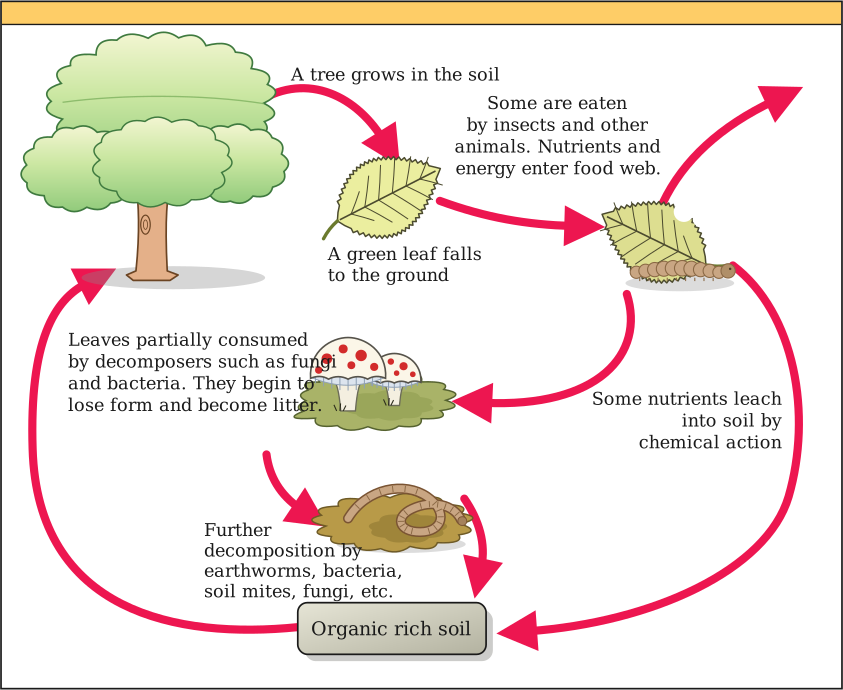
Drawn by us to help you understand the concept clearly, and verified to make sure it's accurate. For exams, practice from your textbook's own diagram.
The figure is a closed pictorial cycle, not a one-way flowchart: a tree grows in the soil, a green leaf falls to the ground, fallen leaves are eaten and fragmented by detritivores, soluble nutrients leach into the soil, fungi and bacteria decompose the remaining litter (catabolism), the resistant remains form humus, and mineralisation releases inorganic nutrients back into the soil — which then nourishes the tree, closing the loop.
Fragmentation, leaching, catabolism, humification and mineralisation all happen simultaneously on the detritus, not strictly one after another. Leached nutrients go down into the soil horizon and, without the humus/mineralisation steps, would end up as largely unavailable salts — mineralisation is what makes them available to plants again. …