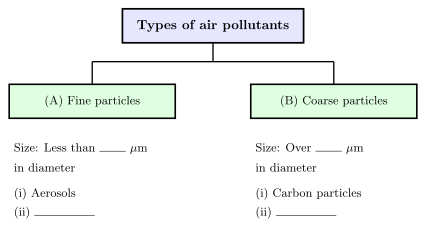
Q.Complete the tree diagram and write examples of (A) and (B) (see figure).
You're viewing a preview — the full solution, concept, methods & PYQ mapping are locked.
Start your 14-day free trial to unlock the full solution →Air pollutant particulates are classed by size into fine particles (<2.5 µm, PM2.5) and coarse particles (>2.5 µm, up to PM10).
Airborne particulate matter is broadly divided by particle diameter. Fine particles are less than about 2.5 micrometres (µm) in diameter (the 'PM2.5' fraction); they stay suspended in air longer, penetrate deep into the lungs, and include examples like aerosols (fine liquid/solid droplets suspended in gas) and smoke or fumes from combustion. Coarse particles are larger, generally over 2.5 µm in diameter (up to about 10 µm, the 'PM10' fraction); they settle out of the air more quickly …
Unlock everything free for 14 days
- Full step-by-step solutions
- Concept-first explanations
- Methods, shortcuts & mistakes
- PYQ mapping + timed mock tests
Full access for 14 days. No credit card required.