Biology · Ch 9 — Control and Co-ordination
Nervous System in Planaria
Nervous System in Planaria
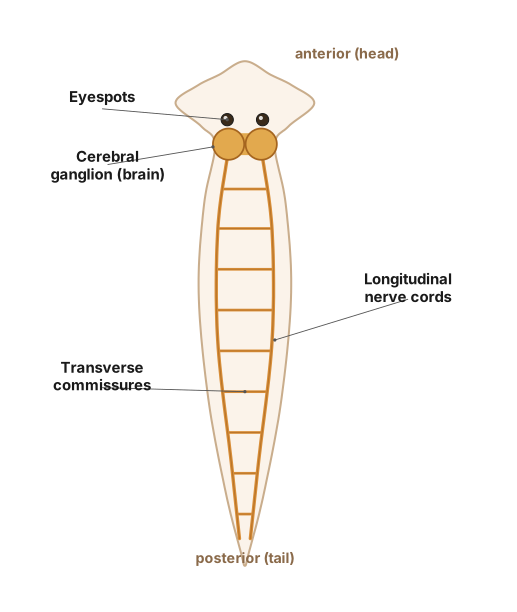
Planaria, a flatworm of the phylum Platyhelminthes, is the most primitive animal to possess a true central nervous system (CNS), positioned on the ventral side of the body. At its head end lies a mass of cerebral (cephalic) ganglion tissue shaped like an inverted U, from which nine branches radiate outward on each side. Running down from these ganglia are a pair of ventral nerve cords (VNC), connected to each other at intervals by transverse connecting fibres called commissures -- an arrangement that, viewed as a whole, looks like a ladder, so it is called the ladder-type nervous system. Lateral to the VNC, a peripheral nerve plexus carries sensory cells arranged in lateral cords, and a pair of photosensory eyes sit on the dorsal side of the brain, alongside scattered single sensory cells over the body.
Drawn by us to help you understand the concept clearly, and verified to make sure it's accurate. For exams, practice from your textbook's own diagram.
What this figure shows. A diagram of a flatworm's nervous system showing a pair of anterior cerebral ganglia shaped like an inverted U near a pair of eyespots, from which two long ventral nerve cords run the length of the body and are linked to each other at intervals by transverse connecting fibres (commissures), giving the whole arrangement the rung-like look of a ladder.
9.2: Ladder-type nervous system in Planaria. …
…