Q.With the help of a neat and labelled diagram, describe reflex arc.
You're viewing a preview — the full solution, concept, methods & PYQ mapping are locked.
Start your 14-day free trial to unlock the full solution →A reflex arc is the pathway of a rapid, involuntary response: Receptor (detects stimulus) -> sensory (afferent) neuron -> relay/association neuron in the spinal cord (synapse) -> motor (efferent) neuron -> effector (m...
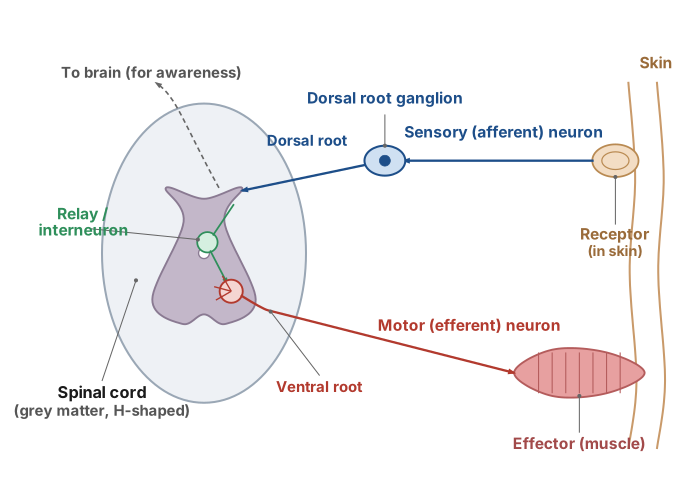
A reflex arc routes a stimulus straight through the spinal cord to a motor response, without waiting for the brain to process it.
A reflex action is a rapid, automatic, and involuntary response to a stimulus, and the anatomical pathway along which the nerve impulse travels to bring about this response is called the reflex arc. For example, in the withdrawal reflex on accidentally touching a very hot object: (1) the receptor, a sensory organ (here, temperature/pain receptors in the skin), detects the stimulus and generates a nerve impulse; (2) this impulse travels along a sensory (afferent) neuron, entering the spinal cord through the dorsal (posterior) root of a spinal nerve; (3) inside the grey matter of the spinal cord, the impulse is relayed via a relay (association/interneuron) neuron, which forms a synapse connecting the sensory pathway directly to a motor pathway; (4) the impulse then passes along a motor (efferent) neuron, which exits the spinal cord via the ventral (anterior) root; (5) finally, the impulse reaches the effector — typically a skeletal muscle — causing it to contract (e.g. withdrawing the hand). Because this circuit is completed within the spinal cord itself and does not have to wait for …
Unlock everything free for 14 days
- Full step-by-step solutions
- Concept-first explanations
- Methods, shortcuts & mistakes
- PYQ mapping + timed mock tests
Full access for 14 days. No credit card required.