Q.Explain the chromosomal mechanism of sex determination in man and birds.
You're viewing a preview — the full solution, concept, methods & PYQ mapping are locked.
Start your 14-day free trial to unlock the full solution →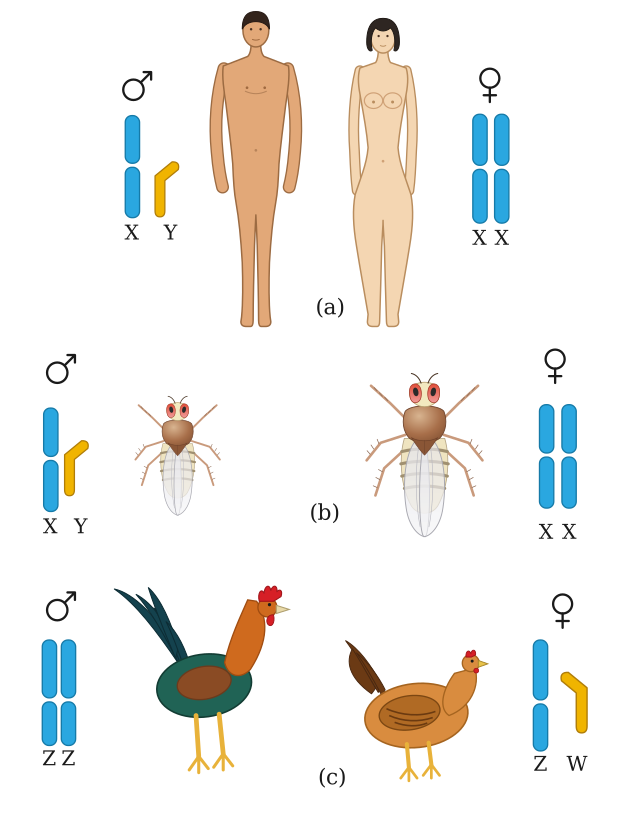
Man uses the XX-XY chromosomal sex-determination system, in which the father's sperm decides the offspring's sex; birds use the ZZ-ZW system, in which the mother's egg decides the offspring's sex - the heterogametic sex differs between the two.
Sex determination in man (XY system):
Humans possess 23 pairs of chromosomes, of which 22 pairs are autosomes and one pair is the sex chromosome pair. Females have two X chromosomes (XX) and are therefore homogametic - every egg produced by meiosis carries a single X chromosome. Males have one X and one Y chromosome (XY) and are therefore heterogametic - meiosis produces two types of sperm in equal numbers, half carrying an X chromosome and half carrying a Y chromosome. At fertilization:
- If an X-bearing sperm fertilises the egg, the zygote is XX, developing into a female.
- If a Y-bearing sperm fertilises the egg, the zygote is XY, developing into a male.
Since all eggs are identical (X-bearing) but sperm are of two kinds, it is the father's sperm that determines the sex of the child, and on average the sex ratio is maintained at 1:1. The Y chromosome carries the SRY (sex-determining region Y) gene, which triggers development of the testes and male characteristics.
Sex determination in birds (ZW system): …
Unlock everything free for 14 days
- Full step-by-step solutions
- Concept-first explanations
- Methods, shortcuts & mistakes
- PYQ mapping + timed mock tests
Full access for 14 days. No credit card required.