Business Studies · Ch 10 — Marketing
Packaging
Packaging
Packaging has become one of the most powerful forces in modern marketing. Many products that were once sold loose — pulses, ghee, milk, salt, cold drinks — are now routinely sold in sealed packages. Packaging is the act of designing and producing the container or wrapper for a product. Its role is so critical that it can make or break a product, especially consumer non-durables. The success of products like Maggi Noodles, Uncle Chips, and Crax wafers is often attributed, in part, to smart packaging.
Levels of Packaging
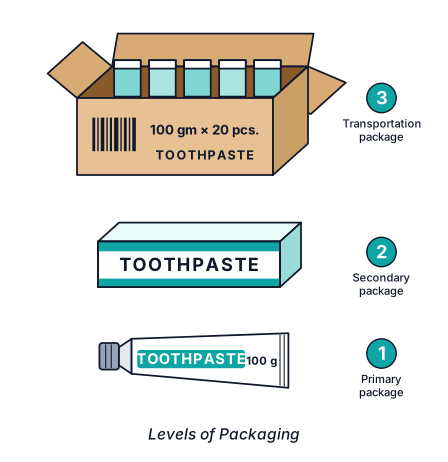
Packaging is not a single layer. There are three distinct levels, each serving a different purpose.
-
Primary Package: This is the product’s immediate container. In some cases, the consumer keeps the primary package until the product is fully used (e.g., a toothpaste tube, a matchbox). In other cases, it is discarded once the product is taken out (e.g., the plastic packet around a pair of socks).
-
Secondary Package: This is an additional layer of protection that is kept only until the product is ready for use. For example, a tube of shaving cream often comes inside a cardboard box. The consumer throws away the box when they start using the cream, but keeps the primary tube.
-
Transportation Package: This refers to the packaging needed for storage, identification, and bulk transportation. For instance, a toothpaste manufacturer sends goods to retailers in corrugated boxes containing 10, 20, or 100 units. This level is rarely seen by the end consumer.
Importance of Packaging
Packaging has gained immense significance for four main reasons:
- (i) Rising Standards of Health and Sanitation: As living standards rise, more people prefer packed goods because the risk of adulteration is minimised.
- (ii) Self-Service Outlets: The growth of self-service retail stores has shifted some of the promotional role from personal selling to packaging. The package itself must now attract and persuade the buyer.
- (iii) Innovational Opportunity: New packaging materials have transformed markets. For example, milk can now be stored for 4–5 days without refrigeration, and innovations in pharmaceuticals and soft drinks have expanded their marketing reach.
- (iv) Product Differentiation: The colour, size, and material of a package shape customer perceptions of quality. A glance at the package of a paint or hair oil can give a strong impression of the product inside.
Functions of Packaging
Packaging performs four key functions in the marketing of goods:
- (i) Product Identification: A distinctive package makes a product instantly recognisable. For example, the red colour of Colgate toothpaste or the familiar jar of Ponds cream helps customers identify the brand at a glance. …
Drawn by us to help you understand the concept clearly, and verified to make sure it's accurate. For exams, practice from your textbook's own diagram.
Our own diagram of the three levels of packaging described in the text: a toothpaste tube (the primary package the consumer keeps and uses), a box around it (the secondary package, discarded once the tube is taken out), and an outer shipping carton holding many units (the transportation package, rarely seen by the end consumer). …