Question of 53
Q.Explain mitochondria with diagram.
Rajasthan RbseRajasthan Board Senior Secondary Part-I Examination 2017Subjective· 3mImportance★★★★★
0% · 0/53 Questions
You're viewing a preview — the full solution, concept, methods & PYQ mapping are locked.
Start your 14-day free trial to unlock the full solution →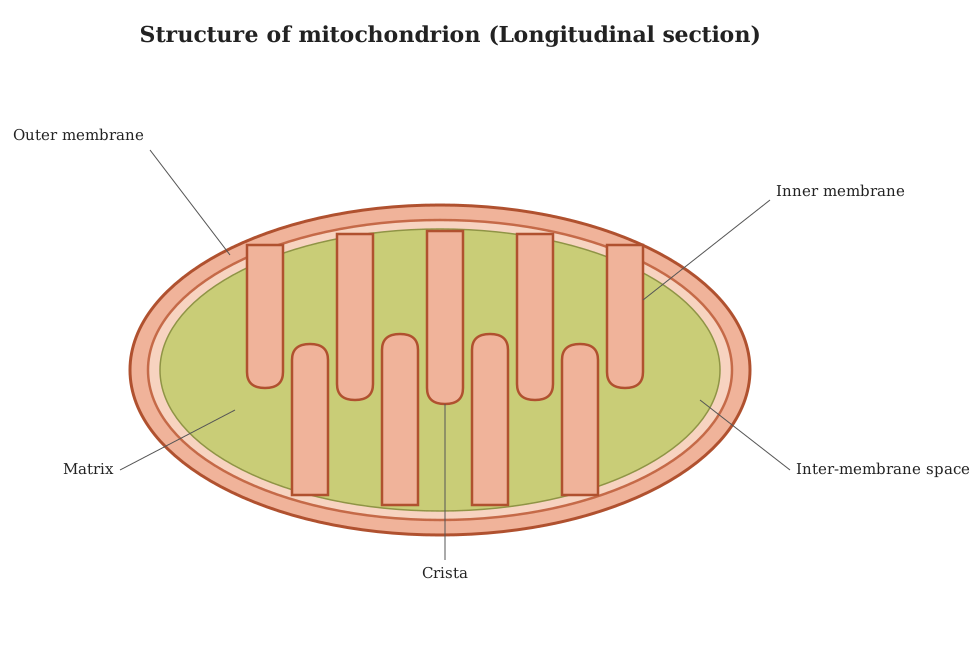
Mitochondria are double-membrane organelles, with the inner membrane folded into cristae, that are the site of aerobic respiration and ATP production — the "powerhouse of the cell".
Structure (described, as no image can be embedded here):
Imagine an oval/rod-shaped organelle bounded by two concentric membranes with a fluid-filled space between them:
- Outer membrane: A smooth, continuous boundary membrane, permeable to most small molecules; encloses the entire organelle.
- Perimitochondrial (intermembrane) space: The narrow fluid space between the outer and inner membranes.
- Inner membrane: Less permeable, and folded inward repeatedly to form finger-like or shelf-like projections called cristae, which greatly increase the surface area available for the electron transport chain and ATP synthase complexes (visible as small stalked particles, F0-F1 particles, studding the inner surface of the cristae).
- Matrix: The space enclosed by the inner membrane, containing a gel-like fluid with the enzymes of the citric acid (Krebs) cycle, single circular mitochondrial DNA (mtDNA), 70S ribosomes, and RNA — mitochondria can therefore synthesise some of their own proteins and divide independently (semi-autonomous organelle, per the endosymbiotic theory). …
Unlock everything free for 14 days
- Full step-by-step solutions
- Concept-first explanations
- Methods, shortcuts & mistakes
- PYQ mapping + timed mock tests
Full access for 14 days. No credit card required.