Q.With a neat labelled diagram, describe the parts of a mature angiosperm embryo sac. Mention the role of synergids.
You're viewing a preview — the full solution, concept, methods & PYQ mapping are locked.
Start your 14-day free trial to unlock the full solution →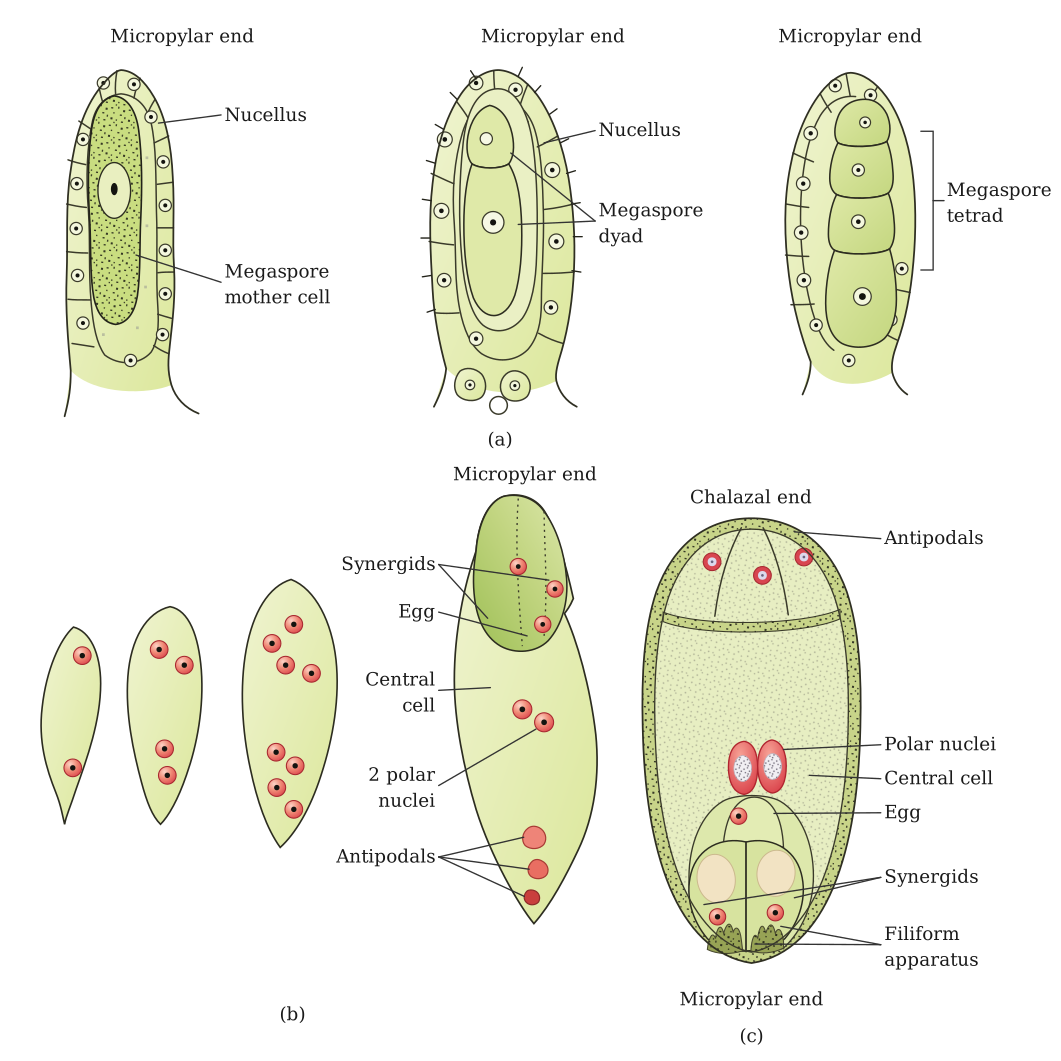
The typical mature angiosperm embryo sac is 7-celled, 8-nucleate: 3 antipodals + a 2-polar-nucleate central cell + an egg apparatus (egg cell + 2 synergids); synergids guide pollen-tube entry via their filiform apparatus.
(Note: I was not given a figure to embed on the published page, so this describes the labelled parts in words rather than reproducing an actual diagram — please treat the description below as the basis for a neat labelled sketch.)
The most common type of mature embryo sac in angiosperms is the monosporic, 8-nucleate, 7-celled (Polygonum-type) embryo sac, developing from a single functional megaspore through three successive mitotic divisions.
Parts of the mature embryo sac (from the micropylar to the chalazal end):
-
Egg apparatus (at the micropylar end): consists of 3 cells —
- 1 egg cell (ovum): the female gamete, which fuses with a male gamete during fertilisation to form the zygote.
- 2 synergids: flank the egg cell on either side. Each synergid has special thickenings at its micropylar tip called the filiform apparatus.
-
Central cell: the large cell occupying the centre of the embryo sac, containing 2 polar nuclei (one derived from each pole of the developing embryo sac), which move to the centre and may fuse to form a single diploid secondary/definitive nucleus before or at the time of fertilisation.
-
Antipodal cells: 3 cells located at the chalazal end of the embryo sac; their exact function is not clearly established, but they are thought to have a nutritive role.
So overall the mature embryo sac has 7 cells but 8 nuclei (since the central cell has 2 polar nuclei but is counted as a single cell).
Role of synergids: …
Unlock everything free for 14 days
- Full step-by-step solutions
- Concept-first explanations
- Methods, shortcuts & mistakes
- PYQ mapping + timed mock tests
Full access for 14 days. No credit card required.