Q.Distinguish between the lytic cycle and the lysogenic cycle.
You're viewing a preview — the full solution, concept, methods & PYQ mapping are locked.
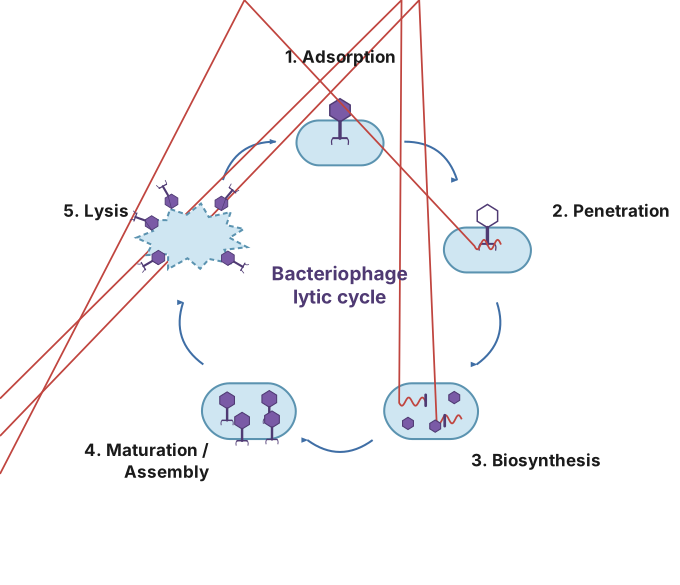
Start your 14-day free trial to unlock the full solution →Both cycles begin the same way, with a phage attaching to a host bacterium and injecting its DNA into it, but what happens next is very different. In the lytic cycle, the injected phage DNA immediately takes over the host's machinery to replicate itself and manufacture new phage components, which self-assemble into new phage particles; the enzyme lysozyme then breaks down the host cell wall, lysing (destroying) the cell and releasing the new phages, so that the host cell is always killed by the end of this cycle. In the lysogenic cycle, by contrast, the injected phage DNA integrates into the host bacterium's own chromosome, becoming a prophage; in this state, it causes no harm to the host and produces no new phage particles, but is instead copied passively along with the host chromosome every time the host cell divides, so the host cell survives and even passes the prophage on to its descendants. Only when certain conditions later trigger the prophage to excise itself from the host chromosome does the phage switch over into the lyt …
Unlock everything free for 14 days
- Full step-by-step solutions
- Concept-first explanations
- Methods, shortcuts & mistakes
- PYQ mapping + timed mock tests
Full access for 14 days. No credit card required.