Q.What is a prophage?
You're viewing a preview — the full solution, concept, methods & PYQ mapping are locked.
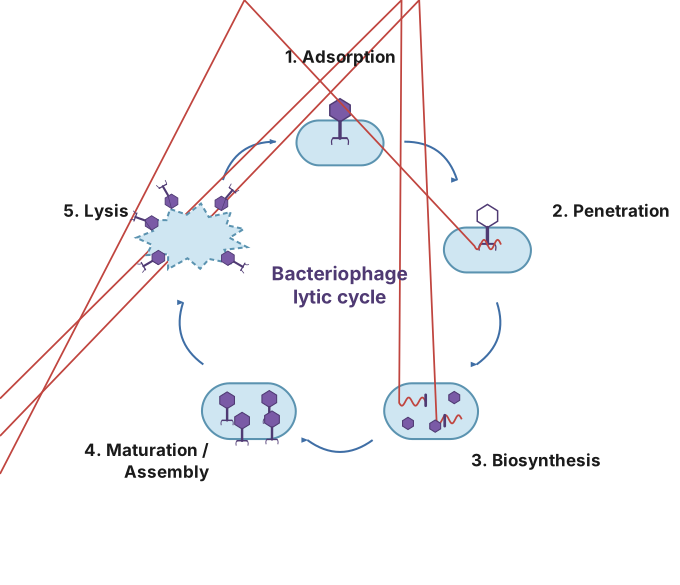
Start your 14-day free trial to unlock the full solution →During the lysogenic cycle, instead of immediately taking over the host cell to make new phage particles, the injected phage DNA integrates itself into the host bacterium's own chromosome. In this integrated state, the phage DNA is called a prophage. While it remains a prophage, it causes no damage to the host cell and does not direct the production of any new phage particles; instead, it is simply copied passively, along with the rest of the host chromosome, every time the host bacterium divides, so that all of the host's descendant cells also carry the same prophage. Under certain conditions, the prophage can later be induced to excise itself from the host chromosome and switch …
Unlock everything free for 14 days
- Full step-by-step solutions
- Concept-first explanations
- Methods, shortcuts & mistakes
- PYQ mapping + timed mock tests
Full access for 14 days. No credit card required.