Biology · Ch 2 — Human Reproduction
Menstrual Cycle
Menstrual Cycle
The menstrual cycle is the rhythmic, monthly series of changes that occur in the female reproductive system, preparing the body for a possible pregnancy. It is driven by the coordinated action of hormones from the hypothalamus, pituitary, and ovaries.
The cycle lasts about 28 days on average, though it can vary from woman to woman (typically 20–40 days). It is counted from the first day of one menstrual period to the first day of the next.
Phases of the Menstrual Cycle
The cycle is divided into four main phases, each defined by specific events in the ovary and the uterus.
1. Menstrual Phase (Days 1–5)
This is the phase of bleeding. The inner lining of the uterus, the endometrium, breaks down and is shed along with blood and mucus. This happens because the previous cycle did not result in pregnancy, so the corpus luteum (a temporary endocrine gland in the ovary) degenerates. The fall in progesterone and estrogen levels triggers the shedding. The menstrual flow lasts for 3–5 days.
2. Follicular Phase (Days 1–13)
This phase overlaps with the menstrual phase and continues until ovulation. The pituitary gland secretes Follicle-Stimulating Hormone (FSH), which stimulates the growth of several ovarian follicles. Typically, only one of these follicles becomes dominant and matures into a Graafian follicle. As the follicle grows, it secretes increasing amounts of estrogen. This estrogen has two key effects:
- It repairs and thickens the endometrium (proliferative phase of the uterus).
- It causes a surge in Luteinizing Hormone (LH) from the pituitary near the end of this phase.
3. Ovulatory Phase (Day 14)
The LH surge triggers the rupture of the Graafian follicle, releasing the secondary oocyte (egg) from the ovary. This event is called ovulation. The released egg is then swept into the fallopian tube. Ovulation marks the end of the follicular phase.
4. Luteal Phase (Days 15–28)
After ovulation, the ruptured follicle transforms into a structure called the corpus luteum. The corpus luteum secretes large amounts of progesterone, and some estrogen. Progesterone is the key hormone of this phase:
- It maintains the thickened endometrium, making it ready for implantation of a fertilised egg.
- If pregnancy occurs, the corpus luteum continues to secrete progesterone until the placenta takes over.
- If pregnancy does not occur, the corpus luteum degenerates into a corpus albicans. The drop in progesterone and estrogen levels causes the endometrium to break down, and the next menstrual phase begins.
The entire cycle is a feedback loop. High estrogen from the follicle triggers the LH surge (positive feedback). High progesterone from the corpus luteum inhibits FSH and LH (negative feedback), preventing new follicle growth during the luteal phase.
Hormonal Control Summary
| Hormone | Source | Key Role in the Cycle |
|---|---|---|
| GnRH | Hypothalamus | Stimulates pituitary to release FSH and LH. |
| FSH | Anterior pituitary | Stimulates follicle growth and estrogen secretion. |
| LH | Anterior pituitary | Triggers ovulation and formation of corpus luteum. |
| Estrogen | Growing follicle | Repairs endometrium; causes LH surge at high levels. |
| Progesterone | Corpus luteum | Maintains endometrium for implantation. |
Menstrual Hygiene and Disorders …
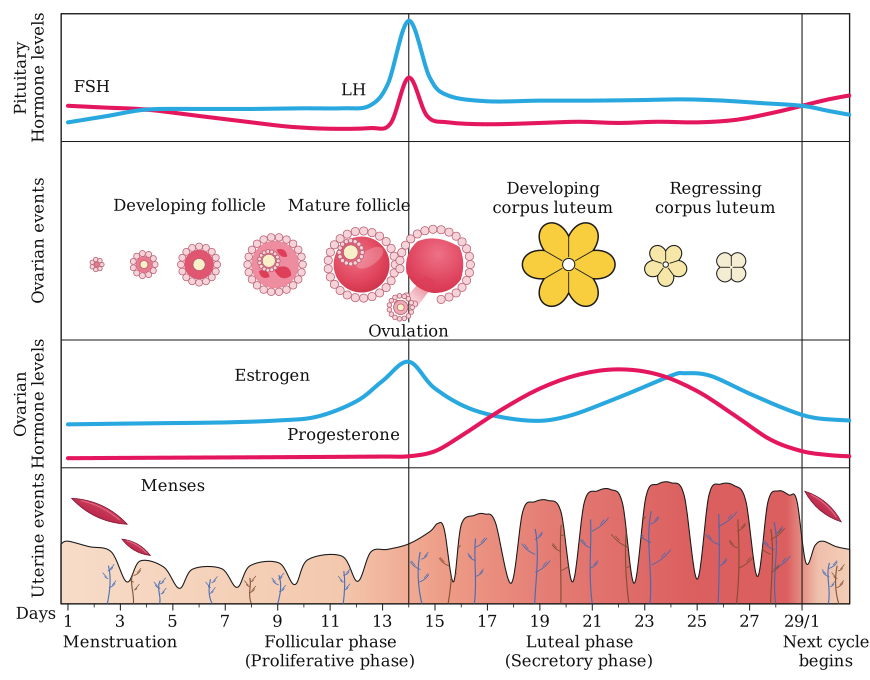
Drawn by us to help you understand the concept clearly, and verified to make sure it's accurate. For exams, practice from your textbook's own diagram.
The figure is a multi-track chart that maps the entire 28‑day menstrual cycle on a single horizontal timeline. The timeline is divided into days, and the chart is split into several stacked panels, each tracking a different set of events.
The topmost panel shows the ovarian events. It begins with a primordial follicle developing into a primary follicle, then a secondary follicle, and finally a Graafian follicle — this is the follicular phase. Around day 14, the Graafian follicle ruptures and releases an ovum: ovulation. After ovulation, the ruptured follicle transforms into the corpus luteum, which persists for about 12–14 days if no pregnancy occurs, then degenerates into the corpus albicans.
The second panel tracks ovarian hormone levels. Estrogen (shown as a solid line) rises steadily during the follicular phase, peaks just before ovulation, then dips briefly and rises again during the luteal phase. Progesterone (shown as a dashed line) remains low during the follicular phase, begins to rise after ovulation, and reaches its peak during the mid‑luteal phase, then falls sharply if pregnancy does not occur.
The third panel tracks pituitary gonadotropins. FSH (follicle‑stimulating hormone) rises gradually during the early follicular phase, then declines. LH (luteinising hormone) stays low until just before ovulation, when it surges dramatically — this mid‑cycle LH surge triggers ovulation. Both FSH and LH remain low during the luteal phase.
The fourth panel shows the endometrial changes. The endometrium is thin during menstruation (days 1–5). During the proliferative phase (days 6–14), it thickens under the influence of rising estrogen. After ovulation, during the secretory phase (days 15–28), the endometrium becomes even thicker and more vascular, preparing for possible implantation. If no implantation occurs, the endometrium breaks down, leading to menstruation. …