MCQ · Q8
Q.Mitochondria are described as 'semi-autonomous organelles' mainly because they:
(a) Lack any internal membrane system altogether
(b) Possess their own circular DNA and 70S ribosomes, and can independently synthesise some of their own structural proteins
(c) Are formed only by budding off from the Golgi apparatus
(d) Have no surrounding double-membrane envelope
West Bengal WbchseTextbookSubjectiveImportance★★★★★est
89% · 32/36 Questions
You're viewing a preview — the full solution, concept, methods & PYQ mapping are locked.
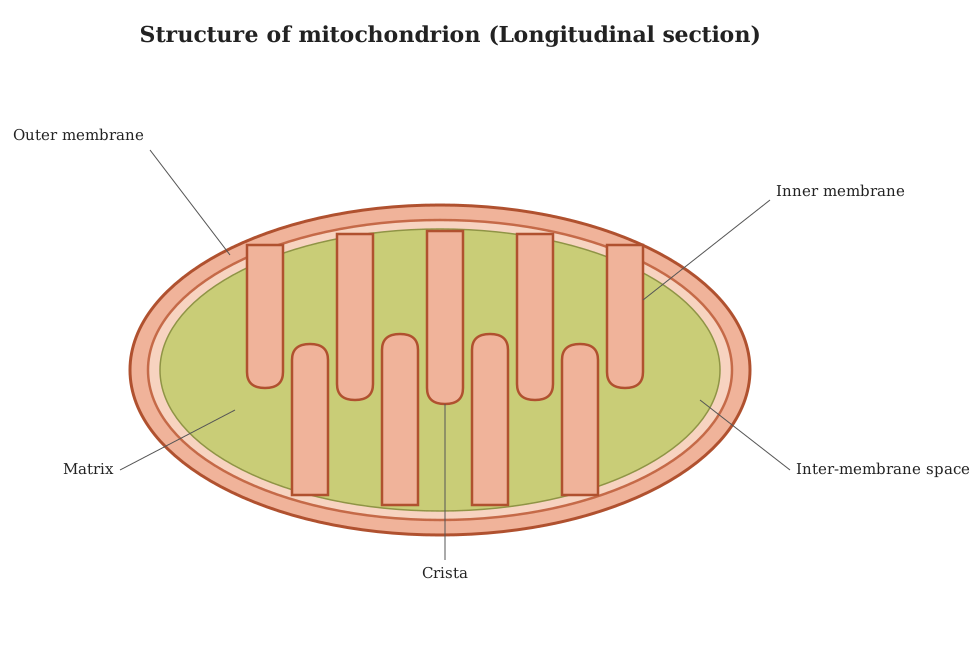
Start your 14-day free trial to unlock the full solution →Mitochondria contain, within their matrix, a small circular DNA molecule distinct from the cell's nuclear DNA, along with their own 70S ribosomes (matching prokaryotic ribosome size). This allows a mitochondrion to synthesise some, though not all, of its own proteins and to divide independently of the cell, but it still depends on the nucleus for most of its protein needs -- hence "semi"-autonomous rather than fully autonomous. Mitochondria do have an elaborate internal membran …
Unlock everything free for 14 days
- Full step-by-step solutions
- Concept-first explanations
- Methods, shortcuts & mistakes
- PYQ mapping + timed mock tests
Full access for 14 days. No credit card required.