Q.Explain why mitochondria are considered 'semi-autonomous' organelles, and briefly state what the endosymbiotic theory proposes about their evolutionary origin.
You're viewing a preview — the full solution, concept, methods & PYQ mapping are locked.
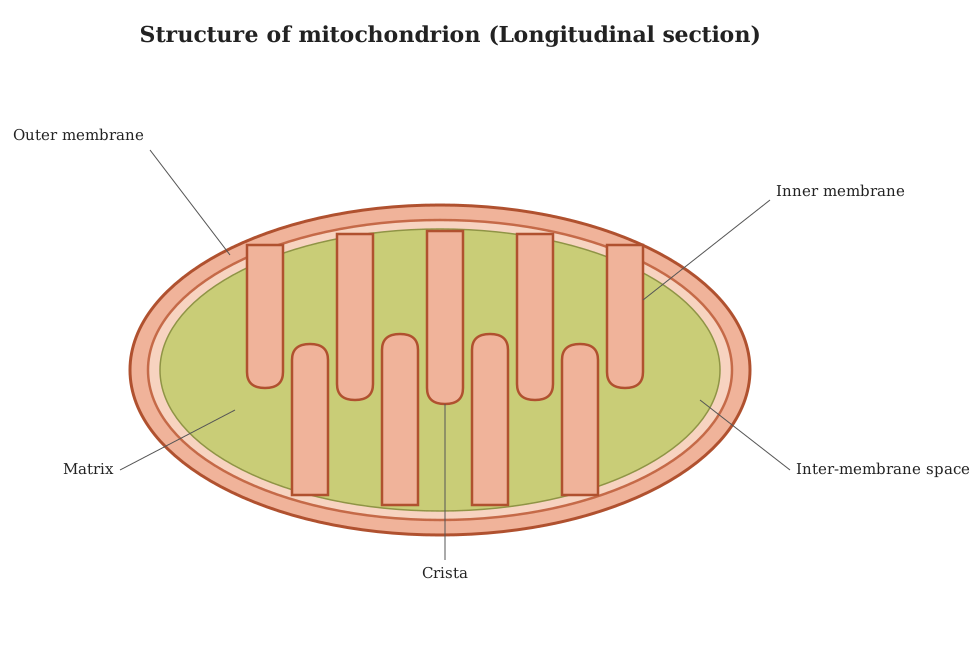
Start your 14-day free trial to unlock the full solution →Mitochondria are called "semi-autonomous" because their matrix contains a small circular DNA molecule, distinct from the cell's nuclear DNA, along with their own 70S ribosomes; this allows a mitochondrion to synthesise some of its own structural proteins and to divide independently of the rest of the cell. It is only "semi" autonomous, however, because it still depends on the cell's nucleus to supply the great majority of the proteins it needs. This combination of features is the structural basis for the endosymbiotic theory, which proposes that mitochondria originated as free-living, aerobic prokaryotic organisms engulfed by a larger ancestral eukaryotic host cell early in evolutionary history; rather than being digested, they survived in a mutually beneficial relationship with the host and …
Unlock everything free for 14 days
- Full step-by-step solutions
- Concept-first explanations
- Methods, shortcuts & mistakes
- PYQ mapping + timed mock tests
Full access for 14 days. No credit card required.