Q.Read the following word diagram of a sewage treatment process and answer the following questions :
You're viewing a preview — the full solution, concept, methods & PYQ mapping are locked.
Start your 14-day free trial to unlock the full solution →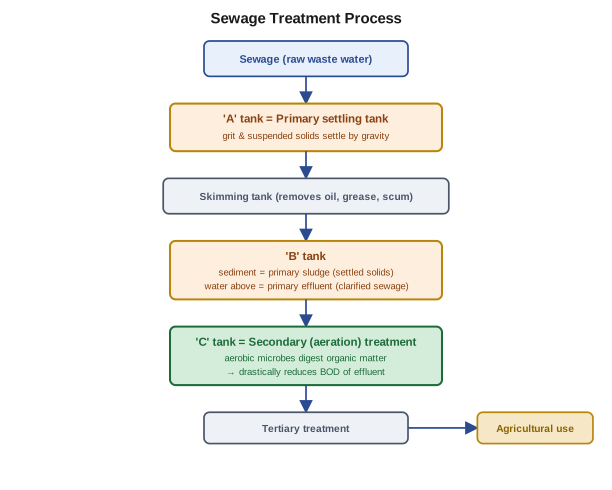
A = primary settling tank (physical settling of solids); B holds primary sludge (sediment) below clarified primary effluent (water); C = secondary/aeration tank where aerobic microbes digest organic matter and reduce BOD.
The chart shows the ordered stages of sewage treatment: Sewage → 'A' tank → Skimming tank → 'B' tank → Secondary treatment ('C' tank) → Tertiary treatment → Agricultural use.
i) 'A' tank — primary sedimentation (settling) tank. As raw sewage first enters, this tank allows the heavier suspended particles — grit, soil and debris — to settle out by gravity. Its main function is thus physical (primary) treatment: removing solids and lowering the suspended-matter load before biological treatment. (The skimming tank next to it removes floating oil, grease and scum.)
ii) 'B' tank — the settled material separates into two parts: the sediment is the primary sludge (the settled solids at the bottom), and the water above it is the primary effluent — the clarified, settled sewage that flows on to secondary treatment.
…
Unlock everything free for 14 days
- Full step-by-step solutions
- Concept-first explanations
- Methods, shortcuts & mistakes
- PYQ mapping + timed mock tests
Full access for 14 days. No credit card required.