Q.With a labelled diagram, describe in brief the origin and development of male gametophyte of Angiosperm. What is Sporopollenin?
You're viewing a preview — the full solution, concept, methods & PYQ mapping are locked.
Start your 14-day free trial to unlock the full solution →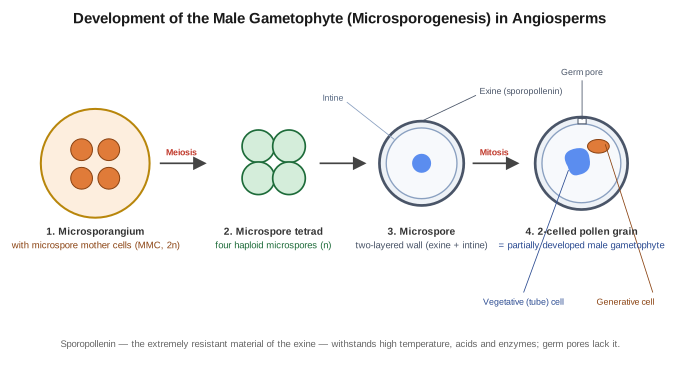
A microspore mother cell in the anther undergoes meiosis to give a tetrad of microspores; each microspore develops a two-layered wall and its nucleus divides to form a vegetative cell and a generative cell — this 2-celled pollen grain is the male gametophyte. Sporopollenin is the resistant material of the exine.
Labelled-diagram description (candidate should draw this sequence):
Draw the development in stages, each labelled — (i) a microsporangium/anther lobe enclosing microspore mother cells; (ii) a microspore tetrad (four microspores after meiosis); (iii) a single microspore with exine and intine walls; and (iv) a 2-celled pollen grain showing the large vegetative (tube) cell with irregular nucleus, the small generative cell, the outer thick exine with germ pores and the inner thin intine.
Origin and development of the male gametophyte:
- Microsporangium: Within each anther lobe are microsporangia containing diploid microspore mother cells (MMC / pollen mother cells).
- Meiosis (microsporogenesis): Each MMC undergoes meiosis to produce four haploid microspores arranged as a microspore tetrad.
- Microspore: The microspores separate; each develops a two-layered wall — an outer hard exine (made of sporopollenin, with germ pores) and an inner thin cellulosic intine.
- First mitosis (development of gametophyte): The microspore nucleus divides mitotically (unequal division) to form a large vegetative (tube) cell — rich in food, with an irregular nucleus — and a small generative cell.
- This 2-celled pollen grain is the partially developed male gametophyte and is usually shed at this stage.
- Second mitosis: The generative cell later divides (before or after pollination) to form two male gametes, completing the male gametophyte.
Sporopollenin: …
Unlock everything free for 14 days
- Full step-by-step solutions
- Concept-first explanations
- Methods, shortcuts & mistakes
- PYQ mapping + timed mock tests
Full access for 14 days. No credit card required.