Biology · Ch 4 — Animal Kingdom
Phylum – Arthropoda
Phylum – Arthropoda
This is the largest phylum in the animal kingdom, and it includes the insects. In fact, more than two-thirds of all the named species on earth are arthropods, which makes this by far the most successful group of animals.
Body organisation, symmetry, layers and cavity
- They show an organ-system level of organisation.
- They are bilaterally symmetrical.
- They are triploblastic.
- They are segmented and coelomate, with a true body cavity.
Exoskeleton, body regions and jointed appendages
The body is covered by a hard outer covering made of chitin, called a chitinous exoskeleton. The body is divided into three regions: a head, a thorax and an abdomen. A key feature is the presence of jointed appendages, and this is what the name means, since arthros stands for joint and poda for appendages.
Respiration, circulation and sense organs
- Breathing is carried out by gills, book gills, book lungs or a system of air tubes called the tracheal system, depending on the group.
- The circulatory system is of the open type, in which blood is not fully enclosed within vessels.
- Sense organs are well developed and include antennae, both compound and simple eyes, and balancing organs called statocysts.
Excretion and reproduction
- Excretion takes place through malpighian tubules.
- They are mostly dioecious, with separate sexes.
- Fertilisation is usually internal. …
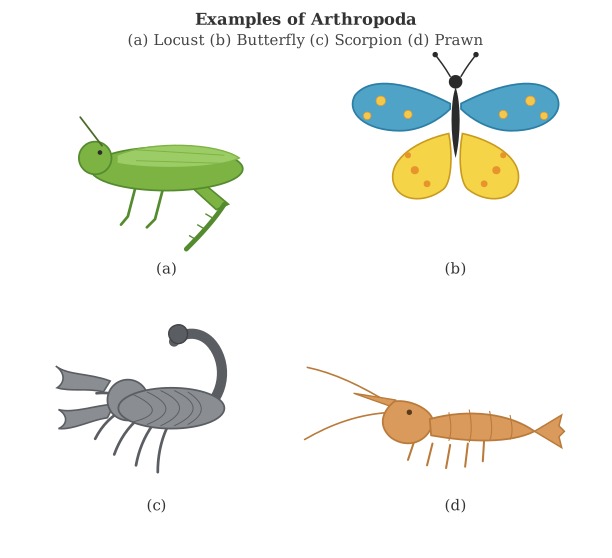
Drawn by us to help you understand the concept clearly, and verified to make sure it's accurate. For exams, practice from your NCERT textbook's own diagram.
These animals belong to Arthropoda, the largest phylum in the animal kingdom, containing more species than all other groups combined. The name means jointed legs, and their defining feature is jointed appendages such as legs and antennae. Their bodies are covered by a hard chitinous exoskeleton and are divided into segments, often grouped into head, thorax and abdomen. They are bilaterally symmetrical, triploblastic and coelomate, with an open circulatory system. Insects like the locust and butterfly, the arachnid scorpion, and the crusta …