Geography · Ch 6 — Natural Hazards and Disasters
Floods
Floods
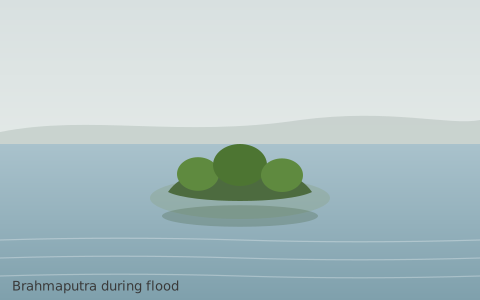
The photograph captures the Brahmaputra in full flood, and the first thing that strikes you is the sheer scale of the water. The river has spread far beyond its normal banks, turning the surrounding flatland into one vast, unbroken sheet of calm, muddy water. There is no churning current or dramatic wave here — the surface is wide and still, which is exactly the point. A flood does not always roar; often it simply sits there, silent and overwhelming.
Rising out of this expanse is a small, forested island or hillock. It is the only piece of dry land in sight, and its trees mark the former ground level that the water has now swallowed. This is the heart of the diagram’s lesson: the flood has not created new land, it has drowned existing land. The hillock survives only because it stands slightly higher than the surrounding plain, and its vegetation remains green and intact, a quiet witness to how much of the landscape has disappeared beneath the surface.
In the background, a hazy line of distant hills closes the scene. Their faint, blurred outline tells you they are far away, and their presence reminds you that the Brahmaputra flows through a valley — a broad, flat basin hemmed in by higher ground. The water’s own reflection is visible on the surface, further emphasising how still and deep the flood has become. Everything in the frame — the calm water, the stranded hillock, the distant hills — works together to show a river that has completely overtopped its banks and occupied the entire valley floor. …
Floods are the most frequent and widespread of all natural hazards, and they occur when a body of water overflows its normal confines. In India, the problem is chronic and severe, because a large part of the country's population and economic activity is concentrated on river plains and coastal lowlands that are naturally prone to inundation.
The book groups floods with two related coastal phenomena — tidal waves and storm surges — because all three involve the abnormal rise and spread of water over land. The distinction matters for understanding both the cause and the damage. A flood in the common sense is river water spilling over its banks. A tidal wave is an unusually high rise of sea water along a coast, often associated with a storm or seismic activity. A storm surge is specifically the rapid rise in sea level driven by the strong winds and low atmospheric pressure of a tropical cyclone, which pushes a wall of water onto the shore.
Why India is flood-prone
The fundamental reason is the monsoon. India receives most of its annual rainfall in a short span of three to four months, from June to September. When the monsoon is intense, rivers carry far more water than their channels can hold, and the excess spills onto the floodplains. The problem is compounded by the fact that the northern Indian rivers — the Ganga, the Brahmaputra and their tributaries — carry enormous volumes of water and sediment from the Himalayas. The sediment gets deposited on the riverbed, gradually raising the bed level. Over time the river's carrying capacity falls, so even a moderate rise in discharge can cause it to breach its banks.
Human activity has made the situation worse. Deforestation in the catchment areas reduces the land's ability to absorb rainwater, so more water runs off quickly into the rivers. Encroachment on floodplains and the construction of settlements, roads and embankments in the natural path of flood waters have narrowed the channels and blocked the natural drainage. The result is that floods that might once have been absorbed by open land now cause heavy damage to life and property.
The damage floods cause
The destruction is not limited to the immediate drowning of people and livestock. Flood waters submerge standing crops, which is a severe blow to an agrarian economy. They damage houses, roads, railways and communication lines, and disrupt the supply of electricity and drinking water. Stagnant flood water becomes a breeding ground for water-borne diseases like cholera, typhoid and malaria, which often claim more lives after the flood than the flood itself. The loss of livelihood, displacement of families and the long process of rehabilitation add a social and economic cost that lasts long after the water recedes.
Tidal waves and storm surges …
Flood refers to the inundation of a large part of land, which otherwise remains dry, by water for some duration of time. It occurs mostly due to the excessive rainfall in a short span of time. Unlike other natural hazards, the causes of floods are well established. It is generally a slow-onset phenomenon, but flash floods, occurring due to dam failures, can be fast-onset events too. Floods occur in a well identified region and within an expected period of time.
Generally, flooding occurs when a river's water level rises so as to overflow the natural or artificial banks. Flooding also occurs when water from various sources, such as rain, gets accumulated on the surface and is unable to drain off quickly enough through the natural or artificial drainage systems. This is due to the fact that the intensity of rainfall is more than the rate of infiltration as well as carrying capacity of the river channels. Sometimes, cyclones and tsunamis also cause coastal flooding. …