Alternation of Generations – From Intuition to Precision
Think about your own life. You are a diploid human – every cell in your body carries two sets of chromosomes, one from each parent. When you reproduce, you produce haploid gametes (sperm or egg) that have only one set. Those gametes fuse to form a diploid zygote, which grows into a new diploid person. That's it – one generation, one body form, one ploidy level.
Now imagine a plant that does something stranger. It grows a green, leafy body that is haploid – every cell has just one set of chromosomes. That haploid plant produces gametes by mitosis (not meiosis), and those gametes fuse to form a diploid zygote. The zygote doesn't just become a new haploid plant. Instead, it grows into a completely different-looking diploid plant. That diploid plant then produces haploid spores by meiosis, and each spore grows into a new haploid plant. Two different bodies, two different ploidy levels, alternating in a cycle.
That is alternation of generations.
Alternation of generations is the life cycle in which a haploid gametophyte (produces gametes) alternates with a diploid sporophyte (produces spores). The two generations are morphologically distinct in many plants – they look different and occupy different roles.
The Two Generations, Named by What They Produce
The names tell you exactly what each generation does:
- Gametophyte (haploid, n): produces gametes (sperm and egg) by mitosis. Since it is already haploid, no meiosis is needed to make gametes – just ordinary cell division.
- Sporophyte (diploid, 2n): produces spores by meiosis. The spores are haploid and each can grow into a new gametophyte.
So the cycle is: gametophyte → gametes → zygote → sporophyte → spores → gametophyte → ...
Where Does Meiosis Happen? Where Does Fertilization Happen?
Two key events mark the transitions:
- Fertilization (fusion of gametes) turns a haploid gametophyte's product into a diploid sporophyte.
- Meiosis (spore formation) turns a diploid sporophyte's product back into haploid gametophytes.
In animals, meiosis produces gametes directly. In plants, meiosis produces spores, and those spores grow into a whole haploid generation that then makes gametes. That extra generation is the entire point of alternation of generations.
A Concrete Example: Moss
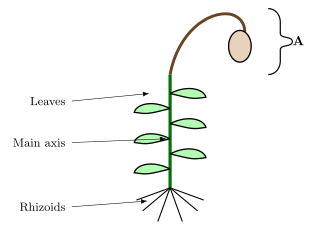
Moss is the clearest case for a first encounter. Walk into a damp forest and you see a green, carpet-like mat. That mat is the gametophyte – haploid, photosynthetic, the dominant, long-lived generation. On top of that mat, you may see tiny brown stalks with capsules at their tips. Those stalks are the sporophyte – diploid, dependent on the gametophyte for nutrition, short-lived. The capsule produces haploid spores by meiosis, which disperse and grow into new green mats.
Two generations, one life cycle, alternating.
A Second Example: Fern
Fern is a step closer to what you might think of as a "normal" plant. The familiar fern frond you see is the sporophyte – diploid, dominant, long-lived. On the underside of the frond are sporangia that release haploid spores. Each spore grows into a tiny, heart-shaped structure called a prothallus – that is the gametophyte, independent but small and short-lived. The prothallus produces sperm and egg; fertilization gives a new diploid sporophyte.
Here the sporophyte is the big, visible plant; the gametophyte is a hidden, miniature stage.
| Plant group | Dominant generation | Gametophyte | Sporophyte |
|-------------|-------------------|-------------|------------|
| Mosses | Gametophyte | Green mat (long-lived) | Stalk + capsule (dependent) |
| Ferns | Sporophyte | Prothallus (tiny, independent) | Fronds (large, dominant) | …