Q.Draw labelled diagrams of the following:
a. Tyndall effect
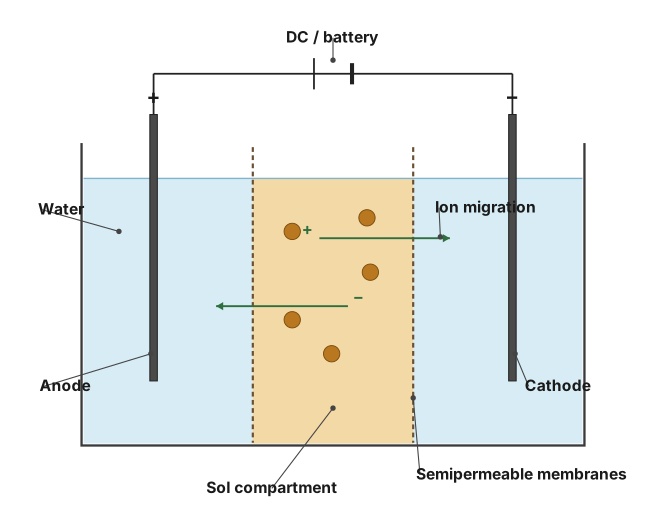
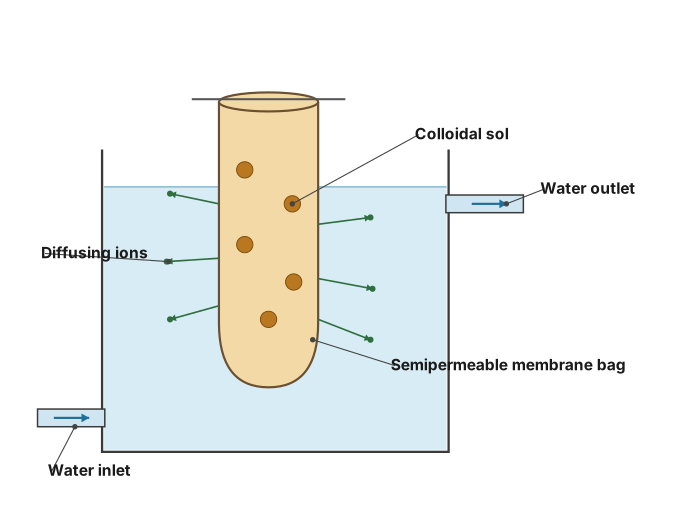
b. Dialysis
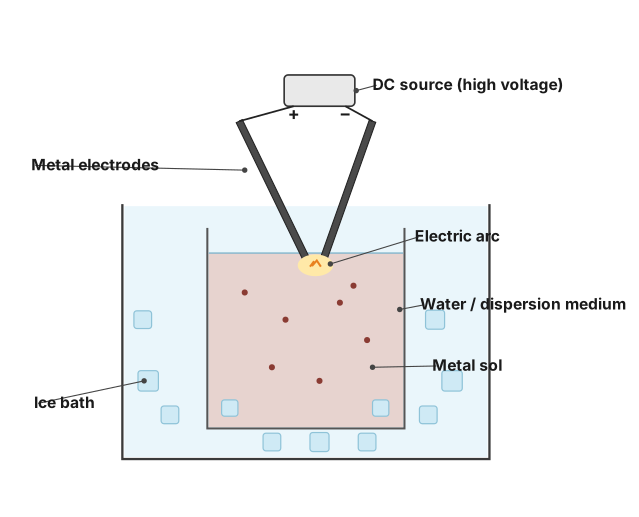
c. Bredig's arc method
d. Soap micelle
You're viewing a preview — the full solution, concept, methods & PYQ mapping are locked.
Start your 14-day free trial to unlock the full solution →a. Tyndall effect. Draw a light source on one side sending a beam into a container of colloidal dispersion; inside the container, draw the beam's path as a distinctly visible, illuminated cone or track (rather than an invisible line) because the dispersed particles scatter light out of the beam; add an observer positioned at right angles to the original beam, looking at and seeing this illuminated 'Tyndall cone'. Label: light source, colloidal dispersion, Tyndall cone, observer.
b. Dialysis. Draw an outer vessel with an inlet and outlet for fresh water flowing continuously through it (label 'water in', 'water out'); inside, suspend a bag made of a dialysing (semi-permeable) membrane, containing the colloidal solution together with dissolved electrolyte; draw small arrows showing the dissolved electrolyte (small ions/molecules) crossing outward through the membrane wall into the flowing water, while the larger colloidal (dispersed-phase) particles remain trapped inside the bag. Label: dialysing membrane, dispersed phase, dissolved electrolyte, water (fresh, flowing).
c. Bredig's arc method. Draw a vessel containing water, itself surrounded by an outer layer of ice; two metal electrodes dip down into the water from above, with a jagged spark/arc symbol drawn between their submerged tips to represent the electric arc. Label: metal electrodes, arc, water, ice. …
Unlock everything free for 14 days
- Full step-by-step solutions
- Concept-first explanations
- Methods, shortcuts & mistakes
- PYQ mapping + timed mock tests
Full access for 14 days. No credit card required.