Biology · Ch 9 — Control and Co-ordination
Neuroglial Cells
Neuroglial Cells
Neuroglial cells : Neuroglial (glial) cells greatly outnumber neurons in the nervous system, and -- despite arising from the same embryonic tissue layer (ectoderm) as neurons -- they do not conduct impulses; instead each type performs a distinct supporting job, and 'neuroglia' collectively refers to all such supporting cells of both the central nervous system (CNS) and the peripheral nervous system (PNS).
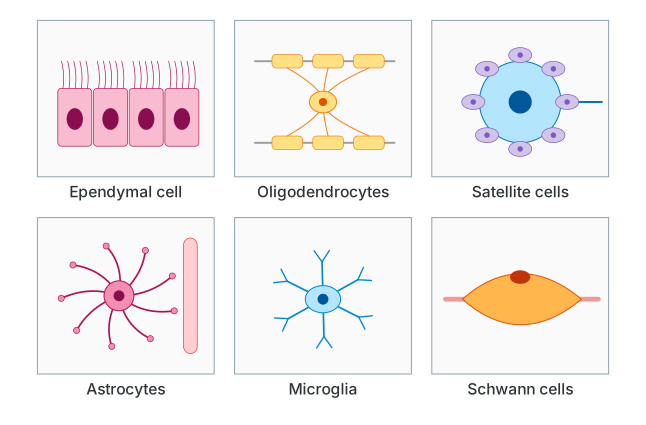
Drawn by us to help you understand the concept clearly, and verified to make sure it's accurate. For exams, practice from your textbook's own diagram.
What this figure shows. A composite diagram placing the different glial-cell types around a central neuron and a nearby blood vessel: in the CNS, star-shaped astrocytes touching a capillary, small-branched microglia, cuboidal ependymal cells lining a cavity, and oligodendrocytes wrapping a central axon; and in the PNS, Schwann cells wrapped around a peripheral axon and satellite cells clu …
Within the CNS, oligodendrocytes have relatively few branches and are the main myelin-sheath-formers, wrapping central axons to build the CNS's white matter (myelin itself is a protein-and-fat insulating sheath that speeds up electrical conduction); microglia (or brain macrophages), small cells with few branches derived from monocytes, act as immune cells, migrating to sites of injury, dead neurons or cellular debris; astrocytes, star-shaped and the most abundant CNS glial cell, secrete and reabsorb neurotransmitter, help maintain the blood-brain barrier (BBB, which -- with the help of the endothelial cells lining brain capillaries -- keeps a check on which ions and large molecules pass from blood into brain tissue), and regulate the flow of electrical impulses within the brain; and ependymal cells form a single, often ciliated, layer of squamous or columnar epithelium lining the brain's ventricles and the spinal cord's central canal, chiefly responsible for producing and circulating cerebrospinal fluid (CSF …
CNS: Oligodendrocytes -- few branches, mainly form the myelin sheath around central axons (the white matter of CNS); myelin is an insulating protein-and-fat sheath that allows quick transmission of electrical impulses.
CNS: Microglia (brain macrophages) -- small cells with few branches, derived from monocytes, act as macrophages that go to sites of injury, dead neurons and cell debris and mediate immune response in the CNS.
CNS: Astrocytes -- star-shaped and the most abundant glial cells of the CNS; secrete and absorb neurotransmitter, help maintain the blood-brain barrier (BBB), and regulate transmission of electrical impulses within the brain.
CNS: Ependymal cells -- form a single layer of squamous or columnar, often ciliated, epithelial cells lining the ventricles/brain cavities and the central canal of the spinal cord; mainly responsible for production and circulation of CSF. …