Biology · Ch 5 — Origin and Evolution of Life
Adaptive Radiation
Adaptive Radiation
Adaptive radiation is the process of evolution through which a single original species gradually transforms into a number of different varieties, each suited to a different ecological niche or set of conditions. Darwin's finches, observed by Charles Darwin during his visit to the Galapagos Islands, are one of the very best-known examples. Darwin noticed a considerable variety of small birds on the islands and concluded that they had all descended from a single mainland American bird species that had originally migrated out to the different islands of the Galapagos archipelago and subsequently adapted to the differing environmental conditions found on each island. Starting from an ancestral, seed-eating form, many other forms evolved over time with altered beak shapes suited to different diets, including several that became specialised for an insectivorous way of life.
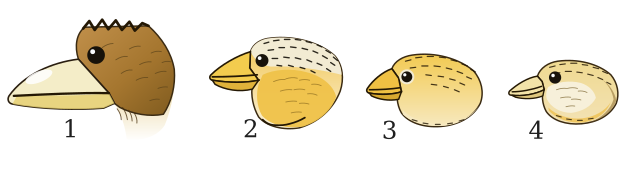
Drawn by us to help you understand the concept clearly, and verified to make sure it's accurate. For exams, practice from your textbook's own diagram.
What this figure shows. A row of finch head-and-beak silhouettes drawn side by side to compare their differently shaped beaks — from stout, deep, seed-crushing beaks to slender, pointed, insect-probing beaks — illustrating how the same ancestral mainland finch diversified into multiple Galapagos species, each beak shape suited to a different a …
…