Q.
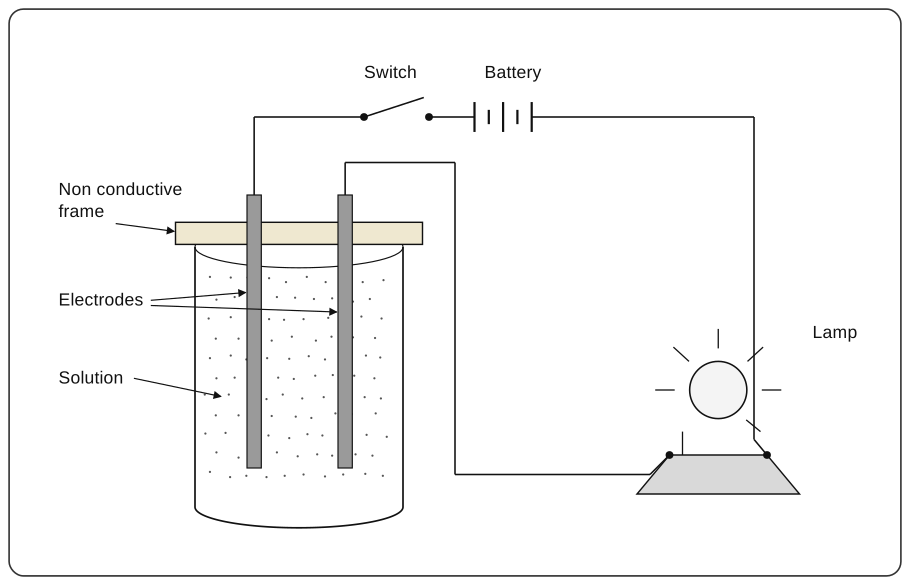
- Arrange a simple set up as shown in the diagram above.
- The lamp will glow when circuit is complete.
- Prepare 5 % (mass/volume) solutions of cane sugar, acetic acid, sodium chloride and urea in distilled water.
- Check the electrical conductivity of these solutions using the above assembly. Compare these with that observed with distilled water.
You're viewing a preview — the full solution, concept, methods & PYQ mapping are locked.
Start your 14-day free trial to unlock the full solution →Step 1. Build the test circuit: battery, switch, lamp, and two electrodes dipped into the test solution -- the lamp lights only when the solution completes the circuit by conducting.
Step 2. Distilled water alone barely lights the lamp, since pure water has very few ions.
Step 3. The sugar and urea solutions behave almost identically to plain water -- both are nonelectrolytes, since sucrose and urea molecules do NOT dissociate into ions in water, so they add essentially no current-carrying species.
Step 4. The NaCl solution lights the lamp brightly -- NaCl is a strong electrolyte, almost completely dissociated into mobile Na+ and Cl- ions at this 5% concentration. …
Unlock everything free for 14 days
- Full step-by-step solutions
- Concept-first explanations
- Methods, shortcuts & mistakes
- PYQ mapping + timed mock tests
Full access for 14 days. No credit card required.